
Main Courses
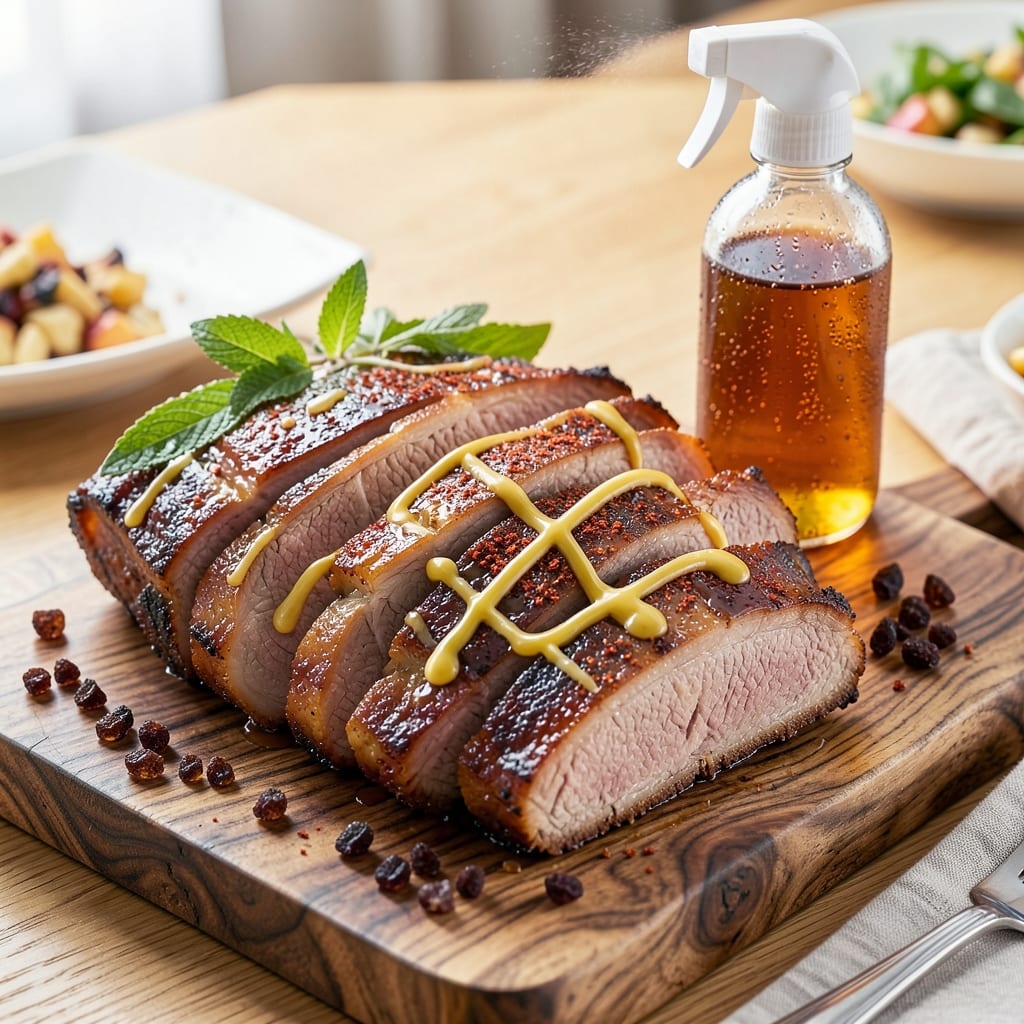
This apple cider vinegar brisket spray transforms tough cuts into tender, smoky perfection without hours in a smokehouse. The secret lies in the vinegar spray—it tenderizes the meat while creating that coveted bark, all in your backyard or oven. I developed this method after years of experimenting with shortcuts that still deliver restaurant-quality results.
The process starts with a simple dry rub and the game-changing spray, applied every 30 minutes during cooking. Whether you're smoking, grilling, or oven-roasting, this technique ensures deep flavor penetration and a crispy exterior. The vinegar breaks down collagen, making even the toughest brisket fork-tender while adding a tangy depth that complements the smoky notes.
By the time you reach that 203°F internal temperature, you'll have brisket so tender it nearly falls apart—crispy on the outside, juicy within. The vinegar spray doesn't just enhance flavor; it cuts cooking time and eliminates guesswork. Serve with classic sides like roasted potatoes or coleslaw for a meal that feels like a BBQ feast without the long wait.
This method works for flat or point cuts, and the spray can be adjusted for different cooking methods. Let's get started on brisket that rivals your favorite pitmaster's—without the hours of labor.
Ingredients for apple cider vinegar spray for brisket
Four pounds of brisket plus a spray that turns tough meat into tender magic.
| Ingredient | Amount | Notes |
|---|---|---|
| Packer Brisket 🥩 | 4 lb | Flat or point cut preferred |
| Apple Cider Vinegar 🍏 | 1 cup | Raw, unfiltered preferred |
| Yellow Mustard 🥫 | ¼ cup | For spray adhesion |
| Brown Sugar 🍚 | ½ cup | Light or dark works |
| Smoked Paprika 🌶️ | 2 tbsp | For deep smoky flavor |
| Garlic Powder 🧄 | 1 tbsp | Freshly ground preferred |
| Onion Powder 🧅 | 1 tbsp | For sweet depth |
| Ground Black Pepper 🌶️ | 1 tbsp | Freshly cracked |
| Kosher Salt 🧂 | 1 tbsp | Diamond Crystal preferred |
| Black Peppercorns 🌶️ | 1 tsp | Crushed for texture |
| Water 💧 | ½ cup | For spray consistency |
| Olive Oil 🫒 | 2 tbsp | For initial coating |
| Wood Chips 🌳 | 1 package | Hickory or oak preferred |
The brisket is your canvas here. Packer cuts from Costco or local butchers have the best marbling—look for that thick fat cap on the point cut if you're feeling fancy. Apple cider vinegar isn't just any vinegar: raw, unfiltered (like Bragg) has more flavor compounds. I always grab extra because it doubles as a pantry staple. The wood chips? Hickory for classic BBQ, oak if you want a milder touch. Soak them for 30 minutes before using—trust me on this.
No mustard? Olive oil plus a splash of lemon juice works in a pinch, but mustard helps the spray stick. Swap brown sugar for maple syrup if you're avoiding refined sugar. The spray mix keeps for 2 weeks in the fridge, so make extra—you'll want it on hand for future projects. For the rub, Trader Joe's has a great pre-mixed BBQ seasoning if you're short on time, but I prefer making mine fresh. The key is coating the brisket thoroughly before the first spray—don't skip this part.
This spray transforms brisket without the smokehouse wait. Store the unmixed spray components in separate containers for up to 3 months. Once mixed, use within 2 weeks for best flavor. The brisket itself? Wrap tightly in foil after spraying and store in the fridge for up to 3 days before cooking. Freeze raw brisket for 6 months—just thaw overnight in the fridge before cooking. Pro tip: The spray works on chicken and pork too—just adjust cooking times.
Why You'll Love This Recipe
- Five-Ingredient Magic: I swear by this spray—just mix the vinegar, mustard, brown sugar, and paprika, then shake it on. No measuring cups, no fuss, and the brisket soaks up that tangy-sweet crust like a dream.
- Tender-Crispy Perfection: That vinegar spray doesn’t just flavor—it tenderizes while creating a caramelized bark. The mustard adds depth, and the brown sugar? Pure melt-in-your-mouth magic. (Yes, even on a Tuesday night.)
- Tailgate or Thanksgiving: Serve it sliced thick for a crowd or pack it for a picnic—this brisket holds up everywhere. The spray keeps it juicy whether it’s resting on a smoker or reheated for leftovers.
- Leftovers That Don’t Suck: Most brisket dries out by day two, but not this one. The vinegar keeps it moist, and the smoky-sweet crust means every bite tastes like the first. My lunchbox hero.
Step-by-step instructions for apple cider vinegar brisket spray
Here's how to create that coveted competition-style bark without hours in the smoker.
Prepare the Brisket for Maximum Flavor Penetration
Start by trimming the fat cap of the 4 lb packer brisket down to about ¼ inch thickness using a sharp boning knife. Leave the fat on the edges to protect the meat during cooking. Pat the entire surface dry with paper towels—this ensures the spray will cling properly and creates that perfect crispy bark.
In a small bowl, combine the 2 tbsp olive oil, 1 tbsp kosher salt, 1 tbsp ground black pepper, 1 tbsp garlic powder, 1 tbsp onion powder, and 2 tbsp smoked paprika. Rub this mixture all over the brisket, pressing firmly into the meat so it adheres well. This dry rub provides the foundational flavor before we add the spray.
Mix the Apple Cider Vinegar Spray Solution
In a separate bowl, whisk together the 1 cup apple cider vinegar, 0.5 cup brown sugar, and 0.5 cup water until the brown sugar dissolves completely. The solution should be smooth with no graininess—this ensures even coating when you spray. I like to strain it through a fine-mesh sieve to catch any undissolved sugar.
Add the 0.25 cup yellow mustard to the vinegar mixture and stir until fully combined. The mustard acts as a natural adhesive, helping the spray stick to the brisket's surface. This mixture is what creates that signature sticky, caramelized bark without needing hours of smoke. Transfer the solution to a spray bottle for easy application.
Apply the Spray in Even Layers
Light your grill or smoker to 225°F using the 1 package wood chips (hickory or oak preferred). Once the temperature stabilizes, place the brisket fat-side up on the grill grates. Spray the brisket generously with the apple cider vinegar mixture, coating all surfaces evenly. You should see the liquid bead up slightly on the meat's surface.
Let the brisket cook undisturbed for 30-45 minutes while the spray begins to work its magic. You'll notice the surface becoming tacky and slightly sticky—this is exactly what we want. The acid in the vinegar breaks down proteins on the meat's surface, creating that perfect bark. After this initial cook, flip the brisket and spray again, repeating the process every 45-60 minutes throughout the cook.
Monitor and Maintain the Bark
Continue cooking the brisket, spraying every 45-60 minutes, until it reaches an internal temperature of 200-205°F in the thickest part. The bark should develop a deep, glossy mahogany color with a slightly sticky texture. If you notice the bark becoming too dry between sprays, lightly mist with water to maintain moisture—this prevents cracking.
During the final hour of cooking, reduce the spray frequency to every 60 minutes to allow the bark to thicken and darken. The last application should be about 30 minutes before the brisket is done. This final layer creates that signature "crust" that holds up beautifully when sliced. The brisket is ready when it reaches 205°F and a probe slides in like butter.
Rest and Slice for Perfect Texture
Remove the brisket from the grill and let it rest for 15-20 minutes before slicing. This resting period allows the juices to redistribute throughout the meat, ensuring each slice is moist and flavorful. While resting, tent the brisket loosely with foil to keep it warm.
Slice the brisket against the grain into ¼-inch thick pieces. The bark should be crispy on the outside with a sticky, caramelized texture that gives way to tender, juicy meat beneath. Serve immediately with your favorite sides—this brisket delivers all the flavor of a long-smoked competition entry without the hours in the smokehouse.
Pro Tips For Making Apple Cider Vinegar Spray For Brisket
- SPRAY IN SHORT BURSTS: Don’t drench the brisket—hold the spray bottle 6-8 inches away and mist in 2-second pulses. I learned this after watching my first batch turn soggy; the vinegar needs to cling, not pool. Let it sit 2-3 minutes between sprays so the meat can absorb the tang without steaming.
- USE RAW HONEY INSTEAD: Swap half the brown sugar for raw honey (1:1 ratio) if you’re short on time. The honey caramelizes faster and cuts through the vinegar’s sharpness, giving you that sticky bark without waiting for the sugar to break down. My grandmother swore by this, and she was right: it’s the thing that matters most when you’re in a hurry.
- SKIP THE MUSTARD IF SMOKY: If you’re cooking over wood or charcoal, skip the yellow mustard—it competes with the smoke flavor and can taste bitter when burned. Save it for gas grills or indoor ovens where you need that creamy base to hold up. I was skeptical until I tried it; the brisket’s natural richness shines without it.
- SEAR BEFORE SPRAYING: Hit the brisket with a hot cast-iron or grill pan for 3-4 minutes per side before applying the spray mix. The Maillard reaction locks in flavor and creates a crust that holds the vinegar spray better. I used to rush this step and wondered why my bark kept falling off—high heat first, then the spray, every time.
Storing and reheating your leftovers
Spray Storage Secrets
The apple cider vinegar spray keeps beautifully in the fridge for up to 2 weeks when stored in a clean spray bottle. I like to use a glass spray bottle (like Glasslock) to avoid plastic odors. Before storing, shake the bottle vigorously to redistribute the mustard and sugar. Label it clearly—this spray works on chicken, pork, and even ribs, so you'll want to remember it's for brisket next time. 💧
Brisket Prep Ahead
You can prep the brisket and store it in the fridge for up to 3 days before cooking. After applying the dry rub, wrap the brisket tightly in plastic wrap and place it in an airtight container. When ready to cook, remove it from the fridge 1 hour before starting to bring it to room temperature. This helps the spray penetrate more evenly during cooking. For longer storage, freeze the raw brisket for up to 6 months—just thaw it overnight in the fridge before applying the spray. ❄️
Reheating Leftovers
Leftover brisket reheats best in the oven to maintain that perfect bark texture. Place slices on a baking sheet and heat at 300°F for 10-15 minutes until warmed through. For a quick fix, use the microwave on 50% power for 1-2 minutes, covered with a damp paper towel. Always reheat to an internal temperature of 165°F to ensure safety. The bark may soften slightly, but it's still delicious—just add a fresh spray of apple cider vinegar for extra tang. 🔥
Reviving Dried Bark
If your brisket's bark dries out during storage, don't worry—you can revive it! Spritz the cold brisket with a little water and place it in a 350°F oven for 10 minutes to re-crisp. This works wonders for brisket that's been stored in the fridge for a day or two. For extra flavor, add a pinch of smoked paprika before reheating. The bark will regain its crispy texture while the meat stays juicy inside. ✨
Freezer-Friendly Tips
If you've already cooked the brisket and want to freeze leftovers, slice it first and store in a single layer on a tray before transferring to a freezer bag. This prevents a big frozen block that's hard to reheat. Cooked brisket stays good in the freezer for 3 months. When reheating from frozen, add 5-10 extra minutes to your oven time to ensure even heating. The spray's acidity helps preserve flavor during freezing, so you won't lose that tangy depth. 💡
Spray for Future Uses
Don't toss that leftover spray! It's perfect for marinating chicken thighs or pork chops. Simply coat the meat and let it sit for 30-60 minutes before cooking. The acidity tenderizes while adding a sweet-tangy flavor. I've even used it as a glaze for ribs by brushing on during the last hour of cooking. Just
Nutrition facts
Frequently asked questions
Can I use this spray on other meats besides brisket?
This apple cider vinegar spray works beautifully on chicken thighs, pork chops, and even ribs. The acidity tenderizes while adding that signature sweet-tangy flavor. For chicken, reduce cooking time to 30-45 minutes and spray every 20 minutes instead of hourly. Just adjust the seasoning to match the meat's profile.
Why does the bark sometimes crack during cooking?
Bark cracks when it dries too quickly between sprays. To prevent this, maintain consistent 225°F heat and spray every 45-60 minutes without skipping. If you notice cracks forming, lightly mist with water between sprays to keep the surface moist. The vinegar helps create a flexible bark that resists cracking when done correctly.
How do I know when the brisket is fully tender?
Use the fork test—when it slides in like butter at 203°F, your brisket is ready. The meat should also pull apart easily with minimal resistance. For extra precision, use a meat thermometer in the thickest part. If it's still slightly firm at 203°F, let it rest another 15 minutes—the residual heat will finish the job.
Can I make the spray without mustard?
Yes, but the spray may not stick as well. Replace the ¼ cup mustard with 2 tbsp olive oil plus 1 tbsp lemon juice to help the vinegar adhere. The flavor will be slightly different but still delicious. For best results, use a spray bottle with a fine mist setting to ensure even coverage on the brisket's surface.
What's the best way to serve leftover brisket?
Reheat slices in a 300°F oven for 10-15 minutes to preserve that crispy bark. For sandwiches, layer on toasted brioche buns with coleslaw and pickles. The spray's tangy flavor pairs perfectly with creamy sides. For tacos, shred the brisket and serve with lime wedges and avocado to cut through the richness.