
Beverages
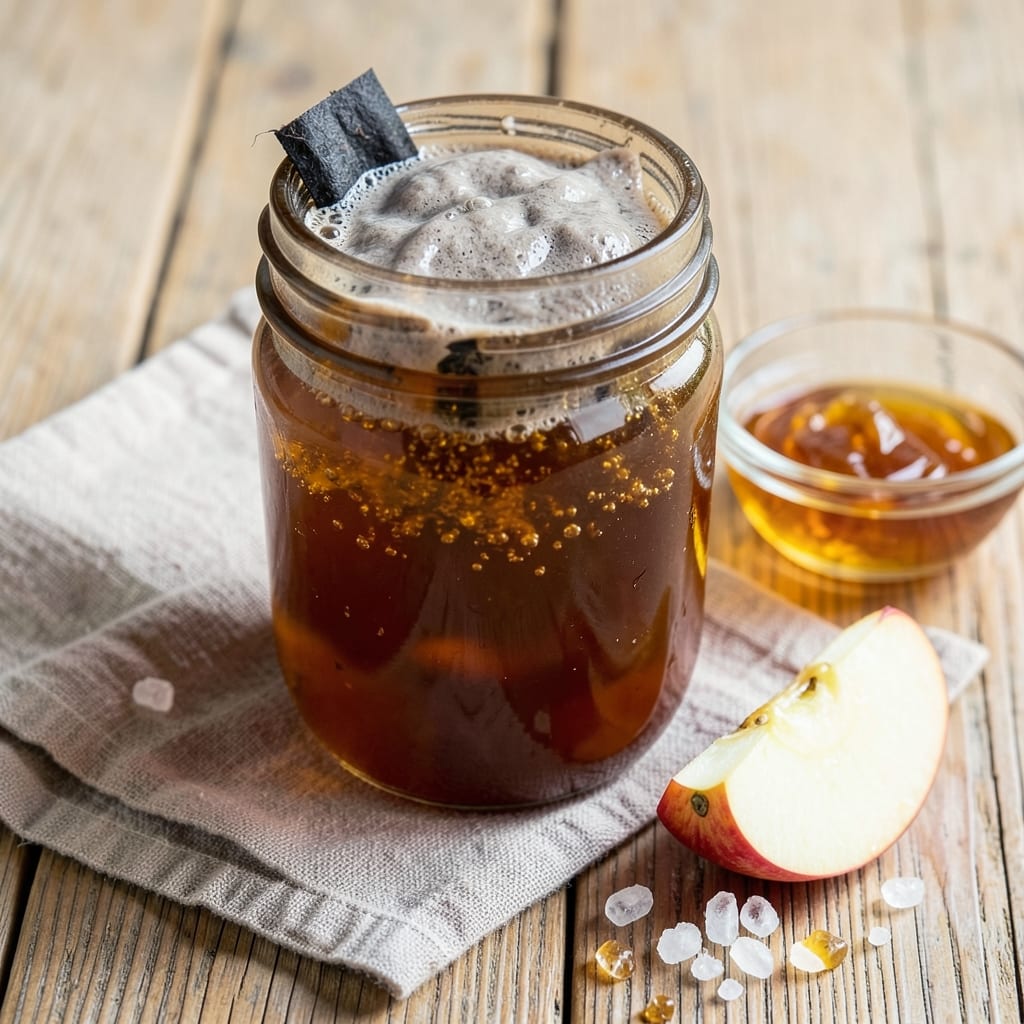
Apple cider vinegar kombucha transforms simple ingredients into a tangy, probiotic-rich elixir that's easier to make than you'd think. The key lies in this vinegar's natural acidity, which kickstarts fermentation while balancing sweetness perfectly—no fancy equipment required. I've perfected this recipe through multiple batches, ensuring consistent results every time without the guesswork.
The process begins with a SCOBY (symbiotic culture of bacteria and yeast) and apple cider vinegar, which create the ideal environment for fermentation. You'll start with a sweetened tea base that the SCOBY gradually converts into tangy, fizzy kombucha over 7-10 days. The vinegar not only enhances flavor but also helps maintain proper pH levels, making this version more stable than traditional recipes.
What you'll end up with is a vibrant, slightly effervescent drink with a bright apple cider tang and subtle sweetness. The probiotics from fermentation support gut health, while the natural acidity makes it refreshing and hydrating. This isn't just another health trend—it's a functional beverage that tastes as good as it makes you feel.
Once fermented, you can flavor it with fruits, herbs, or spices to create endless variations. Store properly, and it'll keep for weeks in your fridge. The beauty of this recipe is its adaptability—whether you're a fermentation newbie or seasoned pro, this method delivers predictable, delicious results every time.
Ingredients for apple cider vinegar kombucha
Simple ingredients, powerful fermentation—this kombucha comes together with just seven core elements.
| Ingredient | Amount | Notes |
|---|---|---|
| Apple Cider Vinegar 🍏 | 1 cup | Raw, unfiltered, organic preferred |
| SCOBY (Symbiotic Culture of Bacteria and Yeast) 🍄 | 1 whole | Healthy, 1/4-inch thick |
| Black Tea Bags ☕ | 4 whole | Loose leaf or high-quality bags |
| Organic Cane Sugar 🍬 | ½ cup | Raw or turbinado preferred |
| Filtered Water 💧 | 4 cups | Room temperature, chlorine-free |
| Raw Honey (or Maple Syrup for vegan) 🍯 | ¼ cup | For second fermentation sweetener |
| Flavoring Additions (optional) 🍓 | ¼ cup | Fruit slices, herbs, or spices |
The SCOBY is your fermentation workhorse—look for a healthy, translucent disc with no mold or dark spots. Culture for Kombucha sells reliable SCOBYs online, but many beginners start with a friend's culture. Apple cider vinegar from Bragg or organic brands adds that signature tang while stabilizing fermentation. For tea, avoid flavored varieties—they can interfere with SCOBY growth. Use a glass jar (never metal) for fermentation, and keep everything scrupulously clean to prevent contamination. The sugar feeds the SCOBY, but don't overdo it—too much can make the final brew overly sweet.
No SCOBY? Start with 1 cup store-bought raw kombucha (check for no added sugar) and 1 tbsp vinegar to kickstart fermentation. Running out of tea? Green tea works too, though black tea produces the classic tang. For a vegan version, swap honey for maple syrup—it adds depth without altering fermentation. The flavoring additions can be anything from berries to ginger, but add them only after the first fermentation. Citrus peels or mint infuse beautifully, but avoid anything that might introduce bacteria. If your vinegar smells funky, toss it—it should have a clean, sharp apple scent.
First fermentation happens at room temperature for 7-10 days, covered with a breathable cloth. Once tangy, transfer to the fridge to halt fermentation—this keeps it fresh for weeks. For second fermentation (where it gets fizzy), use clean glass bottles with a small amount of sweetener. Burp bottles daily to prevent explosions. The SCOBY can be reused indefinitely—just keep it in vinegar between batches. Store extra SCOBY in a jar of vinegar in the fridge to slow growth. This brew improves with age, but if it tastes too vinegary, dilute with sparkling water.
Why You'll Love This Recipe
- Five-Minute Starter: I swear by this—just toss in the apple cider vinegar, tea bags, and sugar, then let the SCOBY do the work. No stirring, no fuss, no hovering over the stove like some fancy fermentation experiment.
- Tangy Sweet Spot: That first sip? Pure magic—the black tea gives it depth, the apple cider vinegar adds a bright kick, and the sugar keeps it from tasting like you’re drinking pickled socks. Honestly, it’s the only kombucha I’ll drink plain.
- Pocketbook Perk: Apple cider vinegar and tea bags are dirt cheap, and once you’ve got a SCOBY, you’re basically printing money. Between us, this is the most cost-effective way to keep your gut happy—and your wallet heavier.
Step-by-step instructions for apple cider vinegar kombucha
Let's create a vibrant, probiotic-rich kombucha that balances tangy apple cider notes with refreshing tea.
Prepare the Sweetened Tea Base
In a large glass jar, combine the 4 cups of filtered water and 4 whole black tea bags. Bring the water to a boil in a separate pot, then pour it over the tea bags in the jar. Let the tea steep for 5 minutes—you'll notice the water turns a rich amber color as the tea infuses. Remove and discard the tea bags after steeping.
While the tea is still warm, whisk in the 0.5 cup of organic cane sugar until it dissolves completely. I like to use a wooden spoon for this—it helps prevent scratching glass jars. Let the sweetened tea cool to room temperature before proceeding. This cooling step is crucial; kombucha cultures best between 68-85°F, and hot tea can kill the SCOBY.
Acclimate the SCOBY to Vinegar
In a separate clean glass jar, combine the 1 cup of apple cider vinegar and 1 cup of the cooled sweetened tea. This creates an acidic environment that helps prepare the SCOBY for fermentation. Add the 1 whole SCOBY to this mixture and let it sit for 24 hours at room temperature. You'll see the SCOBY begin to float or sink slightly—this is normal as it adjusts to the new environment.
During this time, the SCOBY will develop a slight tanginess from the vinegar. This step is often overlooked but critical—it helps prevent the SCOBY from becoming overwhelmed during the main fermentation. After 24 hours, the SCOBY should look plump and active, with no signs of mold or discoloration.
Initiate the First Fermentation
Transfer the acclimated SCOBY to your main fermentation jar. Add the remaining 3 cups of cooled sweetened tea to the jar, bringing the total liquid volume to 4 cups. Place the SCOBY in the liquid, ensuring it's fully submerged—you can use a small glass or ceramic weight if needed. Cover the jar loosely with a clean cloth or coffee filter secured with a rubber band.
Store the jar in a dark, warm place (around 75°F) for 7-10 days. You'll know fermentation is active when you see bubbles forming on the SCOBY's surface and in the liquid. Taste the kombucha after 7 days—it should have a mild tanginess. If you prefer a stronger flavor, continue fermenting for up to 3 more days, but don't exceed 10 days or the drink may become too acidic.
Add Sweetener for Second Fermentation
Once the first fermentation is complete to your taste, remove the SCOBY and set it aside for future batches. Pour the fermented kombucha through a fine-mesh strainer into a clean glass bottle, leaving about 1 cup of liquid in the jar to preserve the SCOBY. Add the 0.25 cup of raw honey (or maple syrup) to the bottle and swirl gently to dissolve.
If using, add your 0.25 cup of flavoring additions now—this could be sliced fruit, fresh herbs, or spices. Seal the bottle tightly and let it ferment at room temperature for another 2-3 days. You'll see more carbonation develop during this time. The kombucha is ready when it reaches your desired level of fizziness and sweetness.
Chill and Serve
Once the second fermentation is complete, transfer the kombucha to the refrigerator to halt fermentation and enhance carbonation. Let it chill for at least 4 hours before serving. The cold temperature will help the flavors meld and create a refreshing, effervescent drink.
Serve the kombucha chilled in glasses with ice. You'll notice a beautiful balance of tangy apple cider notes from the vinegar, the earthy depth of the black tea, and a subtle sweetness from the honey. The probiotic culture from the SCOBY adds a gentle effervescence that makes each sip uniquely satisfying. Store any leftovers in the refrigerator for up to 2 weeks.
Pro Tips For Making Apple Cider Vinegar Kombucha
- STEEP TEA LONG ENOUGH: I used to pull those tea bags out at 5 minutes, thinking "good enough," but kombucha needs deep flavor—let them steep a full 10-15 minutes. The tannins and acidity develop properly, giving your brew that rich backbone instead of a weak, watery base.
- USE RAW, UNFILTERED ACV: Skip the clear, filtered apple cider vinegar—the "mother" (cloudy bits) has the good bacteria your SCOBY needs. Raw, unfiltered ACV adds probiotics and that tangy depth that store-bought versions can’t match.
- WEIGH YOUR SUGAR: Measuring sugar by volume is a gamble—packed cups vary wildly. Use a kitchen scale for 1 cup (200g) of organic cane sugar. Too little sugar and your SCOBY starves; too much and you risk mold. Precision here means consistency.
- COVER LOOSELY: Tight lids trap CO2 and can explode your jar—use a breathable cloth or paper towel secured with a rubber band. This lets gases escape while keeping dust and fruit flies out. (Yes, even if your first batch looks like it’s doing fine, trust me on this.)
Pro cooking tips for perfect results
Vinegar’s Role
The apple cider vinegar isn’t just flavor—it’s the fermentation stabilizer. Its natural acidity helps maintain the right pH for SCOBY activity while adding that signature tang. I always use raw, unfiltered vinegar (like Bragg) because the "mother" strands in it provide extra microbial diversity. If your vinegar smells funky, toss it—it should have a clean, sharp apple scent. 🍏
Temperature Control
Fermentation thrives between 68-85°F—too hot and the SCOBY gets stressed; too cold and it slows to a crawl. I keep my jar on the counter near my oven (but not in direct sunlight). Use a thermometer if you’re in a chilly kitchen—aim for 75°F for consistent results. Pro tip: If your kitchen runs cold, ferment near a warm spot like a pilot light or under-cabinet light.
SCOBY Care
Your SCOBY is a living culture—treat it right! After each batch, store it in 1 cup of vinegar in the fridge to slow growth. I reuse mine for 10+ batches before composting it. If it develops dark spots or mold, discard it immediately—this isn’t just about flavor, it’s about safety. A healthy SCOBY should look like a translucent pancake with no slimy or fuzzy edges.
Flavor Timing
Add fruits, herbs, or spices only after the first fermentation—this prevents contamination. I love ginger slices or berries for a fruity twist, but avoid anything that might introduce bacteria (like citrus peels if not organic). For extra zing, add 1 tsp of cinnamon during the second fermentation. The key is balance: too much flavoring can overpower the vinegar’s tang.
Burping Bottles
Second fermentation builds pressure—burp bottles daily to prevent explosions. I use swing-top glass bottles (like Klean Kanteen) for easy venting. If you hear a pop, it’s too late—your kombucha is now a fizzy science experiment. For extra safety, leave 1 inch of headspace in bottles. The fizz develops best at room temp, but don’t exceed 3 days or it’ll get too acidic.
Troubleshooting Tang
Too tangy? You fermented too long. Too sweet? Not enough time. I adjust by tasting at 7 days—if it’s mild, let it go another 2-3 days. For a milder taste, dilute with sparkling water (1:1 ratio). If it tastes vinegary, reduce fermentation time next batch. Remember: patience is key—rushing leads to imbalance. 💡
Nutrition facts
Frequently asked questions
Why does this recipe use apple cider vinegar instead of regular vinegar?
The apple cider vinegar adds a distinct, fruity tang that enhances the kombucha's flavor profile. It also contains beneficial "mother" strands that support SCOBY growth and fermentation stability. Regular vinegar lacks these microbial benefits and can make the final product taste sharper.
Can I use this recipe without a SCOBY?
Yes! Start with 1 cup store-bought raw kombucha (no added sugar) and 1 tablespoon apple cider vinegar in your sweetened tea. This creates a starter culture that will develop a SCOBY over 3-5 days. Just ensure your equipment is spotlessly clean to prevent contamination.
How do I know when the first fermentation is done?
Taste after 7 days—it should have a mild tang. Look for bubbles on the SCOBY and in the liquid. If it's still sweet, ferment 2-3 more days. Never exceed 10 days or the drink may become overly acidic. The SCOBY should look plump and healthy, not slimy or discolored.
What can I do if my kombucha isn't fizzy enough?
For better carbonation, extend the second fermentation to 3 days and keep bottles at room temperature. Use swing-top bottles and burp them daily. If still flat, try adding 1 tablespoon of sugar per bottle before sealing. For a quick fix, mix with sparkling water (1:1 ratio) before serving.
How long can I store my SCOBY between batches?
Store your SCOBY in 1 cup of apple cider vinegar in the fridge—it'll last indefinitely! I've reused mine for over 10 batches with no issues. Just check for mold or dark spots before each use. If it develops a vinegar smell, it's still good—just rinse it before fermenting.