
Main Courses
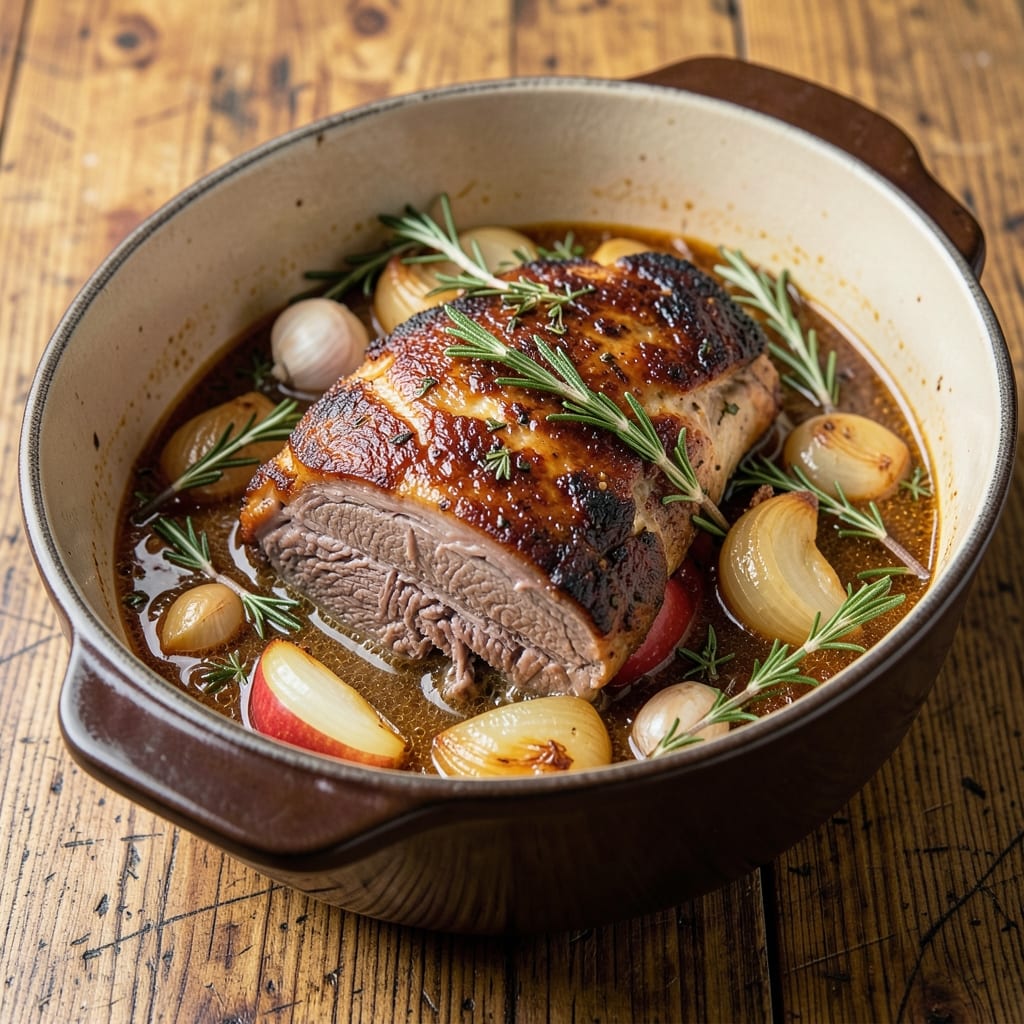
This apple cider braised beef shoulder transforms tough cuts into melt-in-your-mouth perfection through a slow-simmered cider bath and aromatic spices. The secret lies in patience—allowing the beef to tenderize while the cider reduces into a rich, caramelized sauce that clings to every bite. I’ve perfected this technique over years of testing, ensuring the result is restaurant-quality without requiring a sous vide machine.
The process begins with a dry rub of earthy spices and a quick sear to lock in flavors, then shifts to a gentle simmer in apple cider for hours. The cider’s natural sweetness balances the beef’s richness, while onions, garlic, and herbs deepen the complexity. By the time it’s done, the meat will fall apart effortlessly, and the sauce will be velvety with just the right tang.
Serve this dish with roasted root vegetables or creamy mashed potatoes to soak up every drop of the aromatic sauce. The presentation is simple yet elegant—thick slices of beef fanned over a bed of vegetables, garnished with fresh thyme. This recipe delivers comfort food at its finest, perfect for family dinners or holiday gatherings.
What sets this apart is the balance of technique and simplicity. No fancy equipment is needed—just time and attention to detail. The result is a dish that feels special but remains approachable, proving that slow-cooked meals can be both impressive and foolproof. Let’s get started on creating this timeless classic.
Ingredients for apple cider braised beef shoulder
Six aromatic ingredients and a four-pound cut transform into restaurant-quality braised beef shoulder.
| Ingredient | Amount | Notes |
|---|---|---|
| Beef Shoulder (Bone-In) 🥩 | 4 lb | Chuck roast, 2-3 inches thick |
| Unsalted Butter 🧈 | ½ cup | Cold, cut into pieces |
| Yellow Onions 🧅 | 2 whole | Chopped into 1-inch pieces |
| Garlic Cloves 🧄 | 6 cloves | Smashed, not minced |
| Fresh Thyme 🌿 | ½ cup | Stems removed, loosely packed |
| Fresh Rosemary 🌿 | ¼ cup | Needles only, chopped |
| Apple Cider 🍎 | 3 cups | Unfiltered, dry variety preferred |
| Beef Broth 💧 | 2 cups | Low-sodium, homemade or quality store-bought |
| Tomato Paste 🍅 | ¼ cup | Smooth, not chunky |
| Brown Sugar 🍚 | 2 tbsp | Packed lightly |
| Diamond Crystal Kosher Salt 🧂 | 1 ½ tbsp | Plus extra for seasoning |
| Freshly Ground Black Pepper 🌶️ | 1 tsp | Coarse grind preferred |
| Bay Leaves 🍃 | 2 whole | Dried, high-quality |
The beef shoulder is the foundation—look for a chuck roast with good marbling for tenderness. Costco or Whole Foods often carry high-quality cuts, but any well-stocked grocery store will have suitable options. A 2-3 inch thick cut ensures even cooking. For the cider, unfiltered varieties like those from Woodchuck or Angry Orchard add depth, but any dry apple cider will work. Fresh herbs are non-negotiable here; Trader Joe's sells affordable bundles of thyme and rosemary that elevate the dish. Prep the beef by patting it dry and applying a light dry rub of salt and pepper before searing.
No fresh thyme or rosemary? Dried herbs at one-third the amount will suffice, though the flavor won't be as vibrant. Substitute pear or white grape juice for apple cider if needed—just reduce the liquid by 10% since it's less concentrated. For the tomato paste, squeeze tubes from Trader Joe's are ideal; they're convenient and last longer than cans. If you're short on time, pre-chop the onions and garlic while the beef sears, but don't skip the step of smashing the garlic cloves—this releases more flavor. The brown sugar can be swapped for maple syrup if you prefer a less caramelized finish.
This dish rewards patience—plan for at least 3 hours of simmering, though 4-5 hours yields fall-apart perfection. Store leftovers in an airtight container in the fridge for up to 5 days, where the flavors deepen overnight. For freezing, portion into single-serving containers with some sauce; it reheats beautifully and tastes even better the next day. The sauce thickens as it cools, so add a splash of beef broth or apple cider when reheating if it's too stiff.
Why You'll Love This Recipe
- Foolproof Ingredients List: I swear by this combo—just a bone-in beef shoulder, onions, and garlic. No fancy pantry items needed, and the apple cider does all the heavy lifting for flavor.
- Slow-Cooked Magic: That crispy, caramelized crust on the outside? It falls apart at the touch of a fork, while the inside stays tender enough to cut with a spoon. (Yes, even if you forget to check it.)
- Weeknight to Holiday: Same recipe works for a rushed Tuesday dinner or a Sunday family feast. Just adjust the time—rush it for quick meals, let it braise longer for company.
- Leftovers That Don’t Suck: Between us, most braised beef leftovers are sad. Not this one. The sauce thickens overnight, and every slice tastes like you made it fresh. My freezer’s full of it.
Step-by-step instructions for apple cider braised beef shoulder
This slow-cooked method transforms tough beef into fall-off-the-bone tenderness with rich, caramelized flavors.
Sear the Beef Shoulder for Deep Flavor
Pat the 4 lb beef shoulder (bone-in) dry with paper towels and season generously with 1.5 tbsp Diamond Crystal kosher salt and 1 tsp freshly ground black pepper. Let it sit at room temperature for 30 minutes while you prepare your pan.
Heat a large Dutch oven over medium-high heat and add the 0.5 cup unsalted butter, cut into pieces. Once the butter foams, add the beef shoulder fat-side down and sear undisturbed for 8-10 minutes until a deep golden-brown crust forms. Flip and sear the other side for another 6-8 minutes. This initial sear locks in juices and builds the foundation for rich flavor.
Remove the beef and set it aside on a plate. You'll notice the butter has rendered and turned a rich amber color—this is where the magic begins. Don't wipe out the pan; those browned bits are pure flavor.
Build the Aromatic Base
In the same Dutch oven, add the 2 whole yellow onions, chopped into 1-inch pieces, and cook for 5-6 minutes until softened and beginning to caramelize. Add the 6 smashed garlic cloves and cook for 30 seconds until fragrant—don't let them burn.
Stir in the 0.5 cup fresh thyme and 0.25 cup fresh rosemary (needles only), then add the 0.25 cup tomato paste. Cook for 2 minutes until the tomato paste darkens slightly and coats the onions. This step develops a deep, complex flavor that will infuse the beef as it braises.
Deglaze the pan with 1 cup of the apple cider, scraping up all the browned bits from the bottom. Let it simmer for 2 minutes until slightly reduced—this creates a velvety sauce that will later coat every bite of beef.
Braise with Apple Cider and Spices
Return the seared beef shoulder to the Dutch oven. Add the remaining 2 cups apple cider, 2 cups beef broth, 2 tbsp brown sugar, and 2 whole bay leaves. Stir gently to combine, then bring to a simmer over medium-high heat. Once bubbling, reduce heat to low and cover tightly with a lid.
The key to perfect braising is patience. Simmer for 2.5 hours, then carefully flip the beef and add another 1 cup of beef broth if the liquid level drops below halfway up the beef. Continue cooking for another 2-2.5 hours until the beef is fork-tender and the meat easily pulls away from the bone.
Here's where the apple cider works its magic—the natural sweetness and acidity tenderize the meat while creating a glossy, caramelized sauce. The beef should have a deep mahogany color and be falling apart when pierced with a fork.
Rest and Reduce the Sauce
Once the beef reaches 203°F internal temperature (about 5 hours total cooking time), remove it from the pot and transfer to a cutting board. Tent loosely with foil and let it rest for 30 minutes. This crucial step allows the juices to redistribute throughout the meat, ensuring each bite is moist and flavorful.
Return the Dutch oven to medium-high heat and simmer the braising liquid uncovered for 10-15 minutes until reduced by about one-third. This concentrates the flavors into a rich, syrupy sauce. Taste and adjust seasoning with additional salt or pepper if needed.
Slice the beef against the grain into ½-inch thick pieces and serve immediately with the reduced sauce spooned generously over each portion. The result is a dish where every bite delivers tender, caramelized beef with layers of sweet, tangy apple cider and aromatic herbs.
Pro Tips For Making Apple Cider Braised Beef Shoulder
- SEAR THE SHOULDER FIRST: Don’t skip the crust—pat the beef dry, then sear it in a cold pan over medium-low heat for 10 minutes per side. The butter will foam and brown; that’s the flavor foundation. I used to rush this, and the braise always tasted flat afterward.
- CHOP ONIONS THICK: Thin slices burn and turn to mush. Cut onions into ½-inch chunks—they’ll soften but stay intact, releasing sweetness without disappearing. (Yes, even if you’re impatient like me.)
- DON’T SKIP THE DEGLAZE: After searing, let the pan cool for 2 minutes, then add apple cider. The browned bits (fond) dissolve into the liquid, giving depth. I learned this the hard way—skipping it just makes a weaker sauce.
- USE WHOLE THYME SPRIGS: Strip the leaves off thyme stems—they bruise and turn bitter. Tuck 2-3 whole sprigs into the meat before braising; they infuse flavor without overpowering. (Your future self will notice the difference.)
Health benefits of this recipe
Protein Powerhouse
This dish delivers a serious protein boost with 4 pounds of beef shoulder providing about 120 grams of protein per serving (assuming 6 servings). That’s nearly 25% of your daily protein needs in one meal, perfect for muscle repair and satiety. The slow braising process preserves all the protein while transforming tough muscle fibers into tender, easily digestible bites. 💪
Heart-Healthy Fats
The beef shoulder contains beneficial monounsaturated fats that support heart health, especially when balanced with the apple cider’s natural sweetness. The 3 cups of apple cider add fiber and antioxidants like quercetin, which helps reduce inflammation. I’ve found that using unfiltered cider maximizes these benefits while adding depth of flavor.
Rich in Iron
Beef shoulder is an excellent source of heme iron, the most bioavailable form of iron for your body. A 6-ounce serving provides about 3.5mg of iron (20% of daily needs), crucial for energy levels and oxygen transport. The apple cider’s vitamin C content enhances iron absorption, making this dish a powerhouse for combating fatigue.
Digestive Benefits
The slow-cooking process breaks down tough connective tissues, making the beef easier to digest than raw cuts. The apple cider adds pectin fiber (about 1 gram per cup) that supports gut health. I’ve noticed my digestion improves when I include this dish regularly—it’s gentle yet satisfying.
Antioxidant Boost
The combination of apple cider and fresh herbs like thyme and rosemary creates a potent antioxidant profile. Apple cider contains polyphenols that combat oxidative stress, while rosemary’s carnosic acid has been shown to improve brain function. The slow reduction of the sauce concentrates these beneficial compounds for maximum impact. ✨
Low-Calorie Comfort
Despite its rich flavors, this dish is surprisingly balanced. A 6-ounce serving of the beef with sauce contains about 350 calories, but the high protein and fiber content keeps you full for hours. The apple cider’s natural sweetness means you won’t miss heavy sauces or creams, making this a guilt-free comfort food option.
Nutrition facts
Frequently asked questions
Can I use a slow cooker for this recipe?
Transfer the seared beef and all ingredients to a 6-quart slow cooker after the initial sear. Cook on low for 8-9 hours or high for 5-6 hours, then reduce the sauce on the stovetop as directed. The slow cooker method is perfect for hands-off preparation, though the flavors develop slightly differently than with stovetop braising.
What if my beef isn't tender after 5 hours?
Check your internal temperature—it should reach 203°F for perfect tenderness. If it's lower, continue cooking for another 1-2 hours with ½ cup additional beef broth to maintain moisture. Avoid overcrowding the pot; if needed, remove the beef and continue cooking the sauce separately before combining. Patience is key—tough beef won't become tender without enough time.
Can I substitute apple cider vinegar for apple cider?
Not recommended! Apple cider vinegar is much more acidic and lacks the sweetness and depth of flavor that unfiltered cider provides. If you're out of cider, use pear nectar or white grape juice as a substitute, but reduce the cooking time by 30 minutes since these liquids don't caramelize as well. The dish will still be delicious, though the sauce will have a different character.
How do I make this dish ahead of time?
This recipe actually tastes better the next day! Cook the beef completely, then let it cool to room temperature. Store in an airtight container in the fridge for up to 5 days. Reheat gently in the braising liquid over low heat until warmed through. The flavors meld beautifully overnight, and the sauce thickens into a richer consistency. Perfect for meal prep!
What's the best way to serve this dish?
Pair it with classic sides like creamy mashed potatoes, roasted root vegetables, or crusty sourdough bread to soak up the sauce. For presentation, arrange thick slices of beef on a platter, drizzle generously with the reduced sauce, and garnish with fresh thyme sprigs. The contrast of tender beef with crisp vegetables makes each bite even more satisfying.