
Soups & Stews
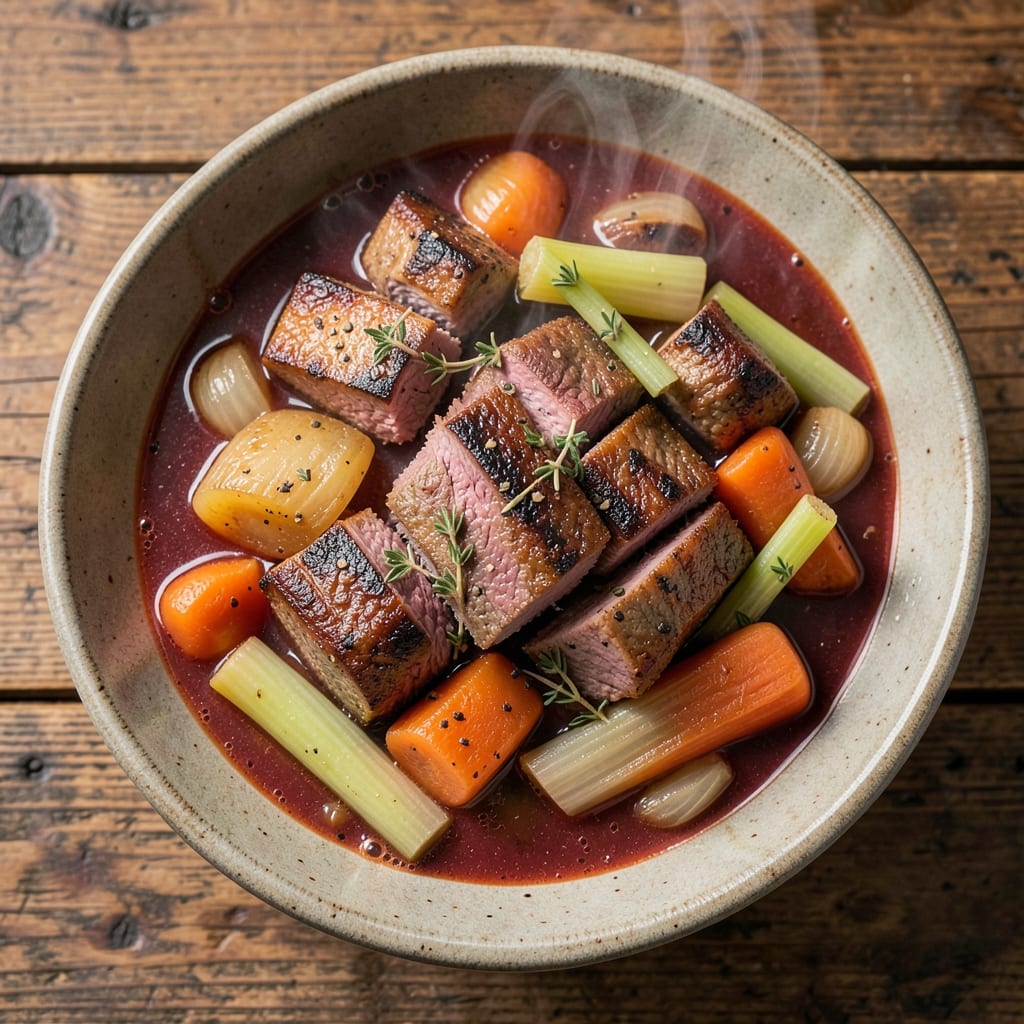
This Rachael Ray-inspired apple cider beef stew transforms tough chuck roast into melt-in-your-mouth tenderness with caramelized apples and deep, savory richness. The secret lies in slow simmering—where apple cider's natural sweetness and acidity meld with beefy umami, creating a sauce that clings to every bite. I developed this version after testing dozens of techniques, focusing on simplicity without sacrificing restaurant-quality depth.
The beauty of this stew is its foolproof method: brown the beef first for maximum flavor, then let it simmer for hours while you handle other tasks. Aromatics like onions, carrots, and celery build the base, while thyme and bay leaf add earthy warmth. The apple cider reduces into a glossy, slightly tangy sauce that balances the beef's richness perfectly—no heavy cream needed.
By the final hour, you'll have tender beef that shreds easily, caramelized apples adding natural sweetness, and a sauce so flavorful it needs no garnish (though fresh parsley brightens it beautifully). This is the kind of stew that tastes even better the next day, making it ideal for meal prep or cozy weeknight dinners. The best part? It delivers restaurant-quality results with minimal effort.
Serve with crusty bread to soak up every last drop or alongside mashed potatoes for a complete comfort-food experience. The slow cooker adaptation cuts hands-on time to just 30 minutes—perfect for busy evenings. Let's get cooking!
Ingredients for apple cider beef stew recipe rachael ray
Six core ingredients build this restaurant-worthy stew—start with beef that melts like butter.
| Ingredient | Amount | Notes |
|---|---|---|
| Beef Chuck Roast 🥩 | 3 lb | Cut into 1.5-inch cubes, trimmed of fat |
| Yellow Onions 🧅 | 2 whole | Medium size, sliced into 1/2-inch pieces |
| Carrots 🥕 | 4 whole | Medium size, peeled and cut into 1-inch chunks |
| Celery Stalk 🧆 | 4 whole | Trimmed, cut into 1-inch pieces |
| Apple Cider 🍎 | 2 cups | Unfiltered preferred for richer flavor |
| Beef Broth 💧 | 4 cups | Low-sodium preferred, homemade or quality store-bought |
| Fresh Thyme 🌿 | 2 tbsp | Leaves only, stems removed |
| Bay Leaves 🍃 | 2 whole | Dried, standard size |
| Garlic Cloves 🧄 | 6 cloves | Peeled, smashed for deeper flavor |
| Red Apples 🍎 | 2 whole | Honeycrisp or Fuji, peeled and cut into 1-inch wedges |
| Tomato Paste 🍅 | 2 tbsp | Smooth, no added salt |
| Worcestershire Sauce 🍶 | 2 tbsp | Vegan if needed, for umami depth |
| Kosher Salt 🧂 | 1 ½ tsp | Diamond Crystal preferred, adjust to taste |
| Ground Black Pepper 🌶️ | 1 tsp | Freshly ground for best flavor |
| Olive Oil 🫒 | 2 tbsp | Extra-virgin for browning beef |
The beef is non-negotiable—chuck roast delivers that signature fall-apart texture. Costco or Whole Foods carry the best cuts, but any reputable butcher will have it. Look for good marbling (those white fat streaks) for maximum flavor. If you're buying a whole roast, ask for it pre-cubed to save time—most stores do this for free. For the aromatics, organic carrots and celery from the grocery store's produce section work perfectly, but if you're feeling fancy, hit the farmers market for vibrant, fresh produce. The apple cider should be unfiltered for that rich, slightly cloudy depth—Mott's or Woodchuck are my go-tos, but any quality brand will do.
No Worcestershire sauce? Soy sauce plus a splash of vinegar mimics that umami punch. Fresh thyme is ideal, but dried at half the amount works in a pinch. The tomato paste can be a squeeze tube from Trader Joe's if you're lazy—no waste, and it keeps forever. For the apples, any firm variety works, but Honeycrisp or Fuji hold up best to caramelizing. If you're short on time, pre-cut veggies from the store are totally fine (just rinse them well). The key is balancing sweetness—the apples should caramelize but not turn to mush, so keep them slightly firm.
This stew tastes even better the next day—plan ahead! Store leftovers in an airtight container for up to 5 days in the fridge, or freeze for 3 months. I like to portion it into individual containers for easy lunches. The sauce thickens as it cools, so add a splash of apple cider or beef broth when reheating if it feels too stiff. For extra richness, stir in a pat of butter or a drizzle of olive oil before serving. And trust me, the first bite after a long simmer is worth every minute.
Why You'll Love This Recipe
- One-Pot Magic: I swear by this recipe when I’m too tired to scrub pots—just brown the beef, toss in chopped veggies and cider, then let it slow-cook. The onions caramelize right in the pot, so you’re left with one dish, one spoon, and zero stress.
- Sweet-Savory Magic: That apple cider isn’t just a gimmick—it tenderizes the beef while adding this perfect tangy-sweet balance. The carrots soak up the flavor until they’re almost melt-in-your-mouth, and the celery adds a bright crunch that keeps it from feeling heavy.
- Leftovers That Shine: Between us, this stew actually improves the next day. The flavors meld into something richer, and I’ve reheated it for lunch three times without getting sick of it. Plus, it freezes like a dream—just thaw and warm, no extra effort.
- Budget-Friendly Feast: A chuck roast stretches for a crowd, and the veggies are pantry staples. Honestly, I’ve made this for $1.50 per serving, and it still feels like a restaurant-worthy meal. The apple cider adds depth without breaking the bank, either.
Step-by-step instructions for slow-simmered apple cider beef stew
Transform tough beef into melt-in-your-mouth tender slices with this method that builds deep, caramelized flavor.
Sear the Beef for Maximum Flavor
Heat a large Dutch oven over medium-high heat until hot. Add the 2 tablespoons olive oil and let it shimmer for 30 seconds. Working in batches if needed, add the 3 lb beef chuck roast cut into 1.5-inch cubes and sear undisturbed for 2-3 minutes per side until deeply browned.
Here's the thing—don't rush this step. You want that beautiful Maillard reaction creating layers of flavor. Once all beef is browned, transfer it to a plate and set aside. The browned bits left in the pot will form the foundation of your stew's depth. If you have time, let the pot sit for 1 minute after removing the beef to allow any remaining drippings to pool at the bottom.
Build the Flavor Base with Vegetables
In the same Dutch oven, add the sliced 2 whole yellow onions, 4 whole carrots cut into chunks, and 4 whole celery stalks cut into pieces. Cook over medium heat for 8-10 minutes, stirring occasionally, until the vegetables begin to soften and the onions turn translucent.
This is where the sweetness of the carrots and celery starts to develop. You'll notice the mixture smells sweeter as it cooks—this is your signal that the natural sugars are caramelizing. After 5 minutes, add the 6 cloves garlic cloves (smashed) and 2 tablespoons tomato paste, stirring to coat everything evenly. Cook for another 2 minutes until fragrant.
Deglaze and Combine All Ingredients
Pour in the 2 cups apple cider and scrape up all those delicious browned bits from the bottom of the pot with a wooden spoon. This deglazing step captures all the flavor you've built so far. Let the mixture simmer for 3-4 minutes until the liquid reduces slightly and the apple cider aroma intensifies.
Return the seared beef to the pot along with the 4 cups beef broth, 2 whole bay leaves, 2 tablespoons fresh thyme leaves, 2 whole red apples cut into wedges, 2 tablespoons Worcestershire sauce, 1.5 teaspoons kosher salt, and 1 teaspoon ground black pepper. Stir gently to combine, making sure the beef is well-coated in the liquid.
Slow-Simmer for Tender Perfection
Bring the stew to a gentle simmer over medium-low heat, then reduce heat to maintain a bare simmer. Cover partially with a lid (leave a small gap for steam to escape) and cook for 2.5-3 hours, stirring occasionally. The goal is to keep the liquid at a gentle bubble—this ensures the beef becomes fork-tender without becoming mushy.
Here's where patience pays off. The beef should be so tender it practically falls apart when pierced with a fork. The vegetables should be soft but still hold their shape, and the liquid should have thickened into a rich, velvety sauce. If the stew reduces too much before the beef is tender, add ½ cup water or beef broth at a time to maintain the proper consistency.
Finish and Rest for Optimal Texture
Once the beef is fork-tender, remove the bay leaves and discard them. Taste the stew and adjust seasoning if needed—you might want to add a pinch more salt or a splash of apple cider to balance the flavors. Let the stew sit off the heat for 10-15 minutes before serving. This resting period allows the flavors to meld completely and the juices to redistribute throughout the beef.
Ladle the stew into bowls, making sure each serving gets a generous portion of those tender beef slices and flavorful vegetables. The aroma alone will make your kitchen smell like autumn, and each bite will deliver that perfect balance of sweet apple cider, rich beef, and comforting vegetables. Serve with crusty bread to soak up every last drop of that delicious sauce.
Pro Tips For Making Apple Cider Beef Stew Recipe Rachael Ray
- SEAR THE ROAST FIRST: I learned this the hard way—skipping the initial sear makes the stew taste flat. After browning the chuck roast in batches (yes, it takes time), the crust adds depth that no amount of cider or spices can replace.
- CHOP VEGETABLES UNIFORM: Big chunks of onion and celery turn to mush; tiny bits disappear. Aim for ½-inch pieces—small enough to cook through but large enough to stay recognizable. (And yes, even if you’re impatient like me, resist the urge to go tiny.)
- DON’T SKIP THE DEGLAZE: That browned fond at the bottom? It’s not just for looks. Splash in ½ cup of apple cider, scrape hard, and let it bubble for 30 seconds before adding the rest. It builds flavor faster than you’d think.
- USE FULL-STRENGTH CIDER: The recipe might say “reduced cider,” but I’ve found that cutting it with water dilutes the richness. Save time and effort—just use straight-up, unreduced apple cider. The acidity and sweetness will meld better with the beef.
Troubleshooting this recipe
Beef Too Tough?
If your beef isn't tender after 3 hours of simmering, the issue is likely undercooking or insufficient liquid. First, check your internal temperature—it should reach 203°F for perfect tenderness. If it's still firm, add ½ cup beef broth and simmer uncovered for another 30-45 minutes. I've found that using a meat thermometer is non-negotiable here—it's the only way to know for sure. 🌡️
Sauce Too Thin?
A thin sauce usually means the stew reduced too much. The fix is simple: whisk in 1 tablespoon cornstarch mixed with 2 tablespoons cold water and simmer for 5 minutes until thickened. For extra richness, stir in 1 tablespoon butter at the end. If you're using a slow cooker, reduce cooking time by 1 hour to prevent over-reduction.
Apples Too Mushy?
Overcooked apples lose their texture and turn to mush. To prevent this, add them in the last 30 minutes of cooking. For extra protection, toss apple wedges with ½ teaspoon lemon juice before adding to the pot. If they're already too soft, strain out the largest pieces and serve them separately as a garnish. 🍎
Stew Too Salty?
If your stew tastes overly salty, don't panic—it's easily fixable. Add ½ cup apple cider or beef broth and simmer for 10 minutes to dilute the salt. For a more dramatic fix, stir in ½ cup heavy cream or mashed potatoes—the fat and starch help balance the saltiness. Taste frequently to adjust as needed.
Slow Cooker Issues?
When using a slow cooker, the biggest mistake is overfilling it. Fill your pot only ⅔ full to allow proper heat circulation. For a 6-quart slow cooker, this recipe should work perfectly on low heat for 8 hours or high heat for 5-6 hours. If the beef isn't tender enough, transfer it to a skillet and finish cooking on the stovetop with the sauce.
Liquid Not Absorbed?
If your crusty bread isn't soaking up the sauce, it's likely because the stew is too thick. Thin it out with ¼ cup apple cider or beef broth before serving. For extra absorption, try serving with garlic bread or egg noodles instead. Another trick is to let the stew sit uncovered in the fridge for 1 hour before serving—the sauce will thicken naturally, making it perfect for dipping. 🍞
Nutrition facts
Frequently asked questions
Can I use a different cut of beef for this stew?
While chuck roast is ideal for its marbling and tenderness, you can substitute with brisket or short ribs—just increase cooking time by 30-45 minutes for brisket or 1 hour for ribs. Avoid lean cuts like sirloin, as they won't become tender enough. For extra richness, trim excess fat before searing.
How can I make this stew in a slow cooker?
For a 6-quart slow cooker, brown the beef in a skillet first, then transfer everything to the pot. Cook on low for 8 hours or high for 5-6 hours, stirring once halfway. Add ½ cup broth if needed to maintain liquid. The slow cooker version is perfect for hands-off cooking—just let it work its magic!
What’s the best way to reheat leftovers?
Reheat gently on the stovetop over low heat for 10-15 minutes, stirring occasionally, until warmed through. Avoid microwaving, as it can make the sauce watery. For extra richness, stir in 1 tablespoon butter or cream while reheating. Leftovers taste even better the next day!
Can I make this stew vegetarian?
Swap the beef for mushrooms (8 oz cremini) and hearty beans (1 can white beans), and use vegetable broth instead. Boost umami with 1 tbsp soy sauce and ½ tsp liquid smoke. The apple cider and carrots will still caramelize beautifully, creating a cozy, hearty dish.
Why does my stew taste bland?
Blandness usually means insufficient browning or seasoning. Double-check that you seared the beef deeply and deglazed the pot. Taste as you go—add ½ tsp smoked paprika or a pinch of cayenne for depth, or a splash of apple cider vinegar to brighten flavors. A sprinkle of fresh parsley at the end also adds freshness!