
Beverages
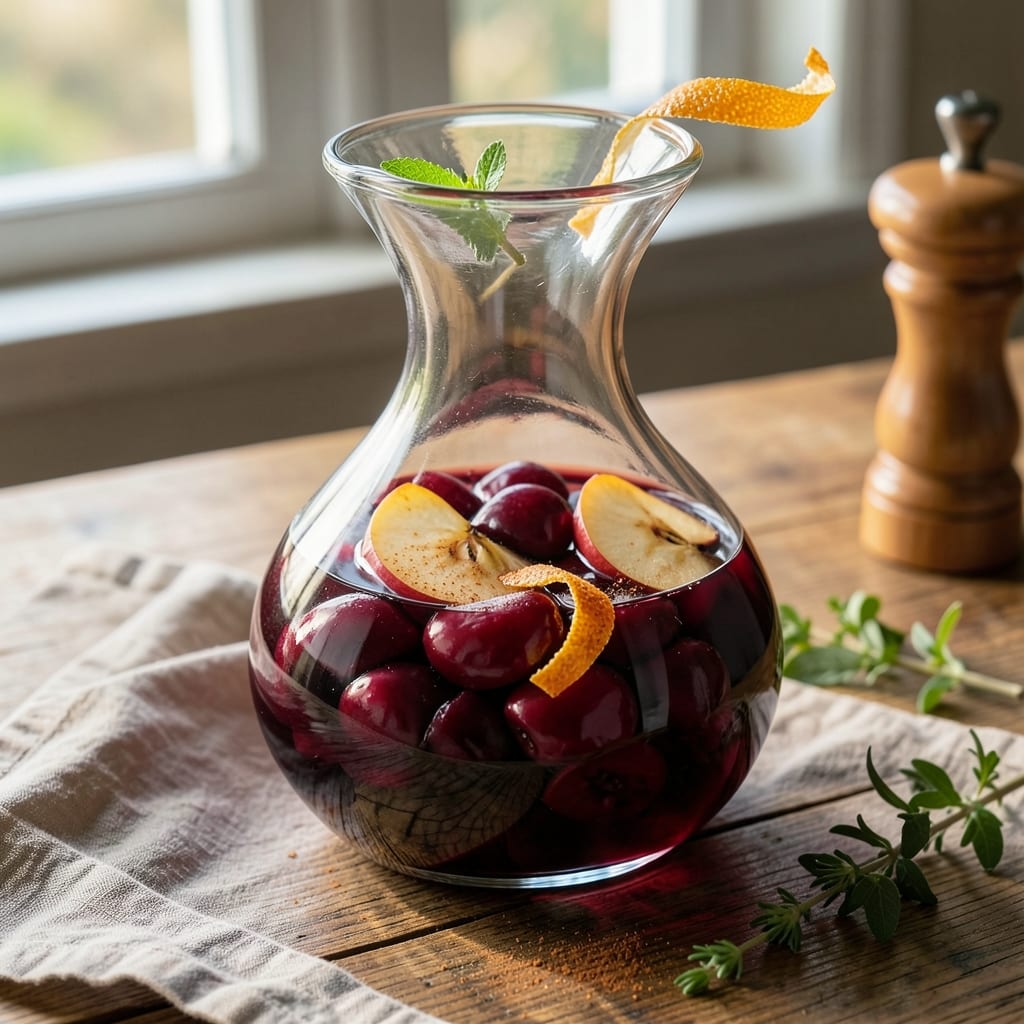
This apple cherry wine recipe transforms simple autumn fruits into a rich, spiced simmer that tastes like fall in a glass. ✨ The secret lies in balancing tart cherries, sweet apples, and bold red wine with warm spices like cinnamon and clove, creating a drink that's perfect for sipping by a fireplace or serving at harvest gatherings.
Unlike commercial fruit wines, this version delivers depth and complexity through slow simmering and careful spice blending. You'll start with fresh ingredients—no shortcuts—and end with a drink that's smooth enough to enjoy chilled or warm, depending on your preference. The process is straightforward but requires patience for the flavors to meld beautifully.
What makes this recipe special is its versatility. Serve it as a standalone drink, pair it with cheese boards, or use it as a base for cocktails. The spices add warmth without overpowering, while the wine provides a sophisticated backbone that elevates the natural sweetness of the fruit.
Ready in about an hour (plus optional aging time), this recipe is perfect for those who love homemade beverages with restaurant-quality depth. Let's get started on creating your own batch of autumnal elegance.
Ingredients for apple cherry wine
Six cups of bold red wine kickstarts this autumnal simmer, blending with tart cherries and sweet apples for depth.
| Ingredient | Amount | Notes |
|---|---|---|
| Red Wine 🍷 | 6 cups | Dry red like Cabernet Sauvignon |
| Tart Cherries 🍒 | 2 cups | Fresh or frozen, pitted |
| Apples 🍎 | 3 medium | Cored and sliced (Honeycrisp preferred) |
| Granulated Sugar 🍚 | 1 ½ cups | Or light brown sugar |
| Orange Peel 🍊 | 1 tbsp | Finely grated, organic preferred |
| Ground Cinnamon 🌿 | 1 tsp | Freshly ground preferred |
| Whole Cloves 🌶️ | 4 whole | Lightly crushed |
| Star Anise 🌟 | 2 whole | Lightly crushed |
| Vanilla Bean 🌸 | 1 whole | Split lengthwise |
| Lemon Juice 🍋 | ½ cup | Freshly squeezed |
| Water 💧 | 2 cups | Filtered preferred |
| Yeast 🍺 | ¼ tsp | Active dry or champagne yeast |
| Campden Tablets 💊 | 1 whole | For sterilizing (optional) |
The wine is the backbone here—Cabernet Sauvignon or Merlot work best, but whatever bold red you’ve got open will do. Cherries should be tart (like Montmorency), not sweet—Trader Joe’s frozen pits are a game-changer if fresh aren’t in season. Apples? Honeycrisp or Granny Smith hold up best during simmering. Skip the pre-sliced grocery store apples—they’re mealy. Core and slice them yourself for better texture. For spices, Penzeys bulk bins have the best quality, but regular grocery store jars work fine if they’re fresh (no dusty smells!).
No tart cherries? Substitute sour cherries or even a splash of cranberry juice—just add 1 tbsp lemon juice to balance. Running low on red wine? Use white wine + 1 tbsp red grape juice for color. The Campden tablet is optional but worth it if you’re fermenting long-term—drop it in with the water and wait 24 hours before adding other ingredients. Star anise is non-negotiable for that classic spiced wine aroma, but if you hate it, double the cinnamon instead. The vanilla bean can be swapped for 1 tsp vanilla extract if you’re in a pinch—just know it won’t be as layered.
This simmer tastes even better after 24 hours in the fridge—flavors meld like magic. Strain through a fine-mesh sieve into sterilized bottles or jars, then store in a cool, dark place. Keeps for up to 6 months unopened, 3 months once opened. Pro tip: Freeze in ice cube trays for easy cocktails later—just toss a cube into sparkling water or gin for an instant autumn drink. The wine will mellow with age, so make extra if you can—it’s perfect for gifting.
Why You'll Love This Recipe
- No-Fuss Fermentation: I swear, this takes less effort than ordering takeout. Just toss in the cherries, apples, and orange peel—no fancy equipment, no stress. The wine does all the work while I sip my first batch.
- Sweet-Tart Magic: That balance? Chef’s kiss. The tart cherries cut through the wine’s richness, while the apples add natural sweetness. A splash of orange peel ties it all together—bright, complex, and way more interesting than store-bought.
- Weekend Project, Everyday Reward: Make a big batch on Sunday, and you’ve got a gift for book clubs, potlucks, or just your own fridge. It’s the kind of thing that tastes better with time, so you’ll always have something special to pull out.
- Budget Bright Spot: Good wine isn’t cheap, but this stretches it into something luxurious. Use affordable reds, seasonal fruit, and a little sugar—suddenly, you’ve got homemade wine that costs pennies per glass. (Yes, even on a Tuesday night.)
Step-by-step instructions for apple cherry wine
Here's how to craft this autumnal elixir—layer by layer, spice by spice.
🍳 Step 1: Sterilize and Prepare the Base
First, if using the Campden Tablets, crush it and dissolve in ½ cup of the red wine in a small bowl. This optional step sterilizes the wine and prevents spoilage. Let it sit for 15 minutes while you prep the rest.
In a large, clean stockpot, combine the remaining 6 cups red wine, 2 cups water, 1.5 cups granulated sugar, 0.5 cup lemon juice, and 1 tbsp orange peel. Bring to a gentle boil over medium-high heat, then reduce to a simmer. Let it bubble for 10 minutes to dissolve the sugar completely.
👨🍳 Step 2: Add Spices and Fruit
Add the 3 medium apples (cored and sliced), 2 cups tart cherries (pitted), 1 tsp ground cinnamon, 4 whole cloves (lightly crushed), and 2 whole star anise (lightly crushed) to the pot. Stir gently to submerge everything in the liquid. The fruit should float slightly—they'll sink as they soften.
Simmer uncovered for 30-45 minutes until the apples are fork-tender and the cherries have burst open. You'll see the liquid darken slightly and the aroma deepen—this is when the magic starts happening. Keep the heat at a gentle simmer; you don't want a hard boil that scatters the spices.
🔥 Step 3: Infuse with Vanilla and Yeast
Remove the pot from heat and let it cool to 70°F (about 30 minutes). This is crucial—yeast is sensitive to temperature. Once cooled, scrape the seeds from the vanilla bean and add them to the pot along with the 0.25 tsp yeast. Stir gently to distribute.
Cover the pot loosely with a clean kitchen towel or lid (leave a small gap for fermentation gases). Let it sit at room temperature for 24-48 hours in a warm spot. You'll see tiny bubbles form on the surface—this is the yeast doing its work. The mixture should smell rich and fruity, like a cross between apple cider and cherry pie.
⏰ Step 4: Ferment and Bottle
After fermentation, strain the mixture through a fine-mesh sieve or cheesecloth into a clean glass container, pressing gently on the solids to extract all the liquid. Discard the fruit and spices (or compost them—they're full of flavor!). Pour the strained liquid into sterilized glass bottles, leaving 1 inch of headspace at the top.
Seal the bottles tightly and store them in a dark, cool place (like a pantry) for 4-6 weeks. The wine will continue fermenting slowly. Taste after 4 weeks—it should be slightly fizzy and tart. If it's still too sweet, let it ferment longer (up to 3 months). Once it reaches your preferred sweetness, refrigerate to slow fermentation completely.
🍷 Step 5: Age and Enjoy
For best results, let the wine age in the fridge for at least 2 weeks before drinking. The flavors will mellow and deepen, with notes of spiced apple, tart cherry, and warm vanilla. Serve chilled in small wine glasses—this is a dessert wine, so pour 3-4 ounces per serving.
This wine keeps for up to 1 year in the fridge, though it's best enjoyed within the first 6 months. Pair it with dark chocolate, apple pie, or sharp cheeses. The balance of sweet, tart, and spice makes it a showstopper for autumn gatherings.
Pro Tips For Making Apple Cherry Wine
- Simmer Low and Slow: Start with a gentle boil, then drop to a barely-there simmer—think tiny bubbles, not rolling chaos. I learned this the hard way when my first batch turned into a sticky mess instead of a rich syrup. Cover the pot and let it bubble softly for at least 30 minutes, stirring occasionally to keep the sugar from clumping at the bottom.
- Pit Those Cherries: Skip the whole cherries if you’re in a hurry, but if you’re using pitted ones, do it yourself—don’t trust the canned shortcut. Those tiny pits can turn your wine into a bitter, gritty disaster. A quick run through a cherry pitter (or a butter knife and some patience) makes all the difference.
- Peel Oranges Fresh: Pre-packaged dried orange peel is convenient, but it’s a flavor crime in this recipe. Zest a fresh organic orange instead—just the outer layer, no white pith—and add it whole to the pot. The oils infuse better, and the texture stays vibrant. (Yes, it’s more work, but your wine will taste like it.)
- Balance the Sugar: Taste as you go—before you add all the sugar. Tart cherries and apples need sweetness, but too much sugar kills the wine’s brightness. Start with half the recipe’s sugar, simmer 10 minutes, then adjust. You’re aiming for a balance where the fruit shines, not a syrup bomb. (Trust me, you’ll regret overdoing it.)
Common mistakes when making perfect results
Over-Simmering the Fruit
Watch the simmer time closely—45 minutes max is ideal. Overcooking turns apples mushy and cherries into a syrupy mess, which clouds your wine. I’ve ruined batches by letting them boil too long, resulting in a muddy, one-dimensional flavor. Use a gentle simmer (small bubbles, not rolling) and check every 10 minutes after 30 minutes. 🌡️
Skipping the Cooling Step
Rushing the cooling phase before adding yeast is a rookie mistake. Yeast dies at temps above 70°F, so if you add it too soon, fermentation won’t start properly. I once forgot and ended up with a flat, undrinkable batch. Let the mixture sit until you can’t even touch the side of the pot without flinching—30 minutes minimum. A thermometer helps, but your finger’s a decent backup.
Ignoring Sterilization
Using non-sterilized equipment or skipping the Campden Tablet risks contamination. I learned this the hard way when my first batch turned vinegary after 3 weeks—turns out, my jars weren’t clean enough. Sterilize everything (pot, bottles, utensils) with boiling water or a 1% bleach solution (1 tbsp bleach per gallon of water, rinse well). The tablet isn’t mandatory, but it’s worth the $5 for peace of mind.
Underestimating Fermentation Time
Tasting too soon is a common trap. I’ve pulled bottles at 3 weeks expecting perfection, only to find them still harsh and sweet. This wine needs 4-6 weeks minimum to develop proper depth. The longer it ferments (up to 3 months), the more complex it becomes. Track your batches with a fermentation log—note dates, temps, and tastes to spot patterns.
Using Low-Quality Wine
Cheap wine with additives or cork taint will ruin your final product. I used a $5 boxed red once, and the result tasted like vinegar. Stick to dry reds like Cabernet Sauvignon or Merlot—they’re bold enough to stand up to the fruit and spices. If budget’s tight, Trader Joe’s Charles Shaw is a solid mid-range option. Never use cooking wine; it’s not worth the risk.
Overlooking Bottle Headspace
Leaving too little headspace (less than 1 inch) causes bottles to overflow during fermentation. I’ve seen bottles explode from pressure—messy and dangerous. Use swing-top bottles or mason jars with wide mouths for easier filling. If you’re unsure, fill 2 inches from the top and adjust later. Always leave room for the yeast to work its magic without creating a pressure bomb. ⚡
Nutrition facts
Frequently asked questions
Can I make this with white wine instead of red?
Yes, but you'll need to adjust the flavor balance. Use a dry white like Sauvignon Blanc and add 1 tablespoon red grape juice per 6 cups wine for color. You may also want to reduce the sugar slightly (1 cup instead of 1.5 cups) since white wines are often lighter. The spice profile will still shine through beautifully!
How do I know when the fermentation is complete?
Fermentation is done when the bubbling slows dramatically and the liquid tastes balanced—no harsh alcohol burn. After 4 weeks, check for sweetness: if it's still cloying, let it ferment another 2 weeks. The wine should be slightly fizzy (like sparkling cider) and smell complex, with notes of apple, cherry, and spices. A hydrometer helps track progress if you're ambitious!
What can I do if my wine turns cloudy?
Cloudiness usually means contamination or unfiltered fruit particles. If it's just sediment, let it settle for 24 hours and carefully pour off the clear liquid. For true cloudiness (like haze), try fining agents like egg whites or gelatin—follow package instructions. If the taste is off (vinegary or sour), start fresh with sterilized equipment. Prevention is key: always use clean tools and consider a Campden Tablet for longer fermentation.
Can I make this without yeast?
Yes! For a non-alcoholic version, skip the yeast and Campden Tablet. Simmer the fruit, spices, and sugar as directed, then strain and sweeten to taste with honey or simple syrup. Store in the fridge—it'll keep for 2-3 weeks. The flavor will be more like a spiced fruit syrup or cordial. Great for cocktails or drizzling over desserts!
How should I serve this wine?
Chill it to 45-50°F for 1-2 hours before serving—this enhances the fruit flavors. Pour 3-4 ounces into small wine glasses (or mason jars for casual gatherings). Garnish with a cinnamon stick or orange twist for presentation. Serve with aged cheddar, dark chocolate, or warm apple pie. For cocktails, mix with sparkling water and lemon for a refreshing spritzer!