
Sauces & Condiments
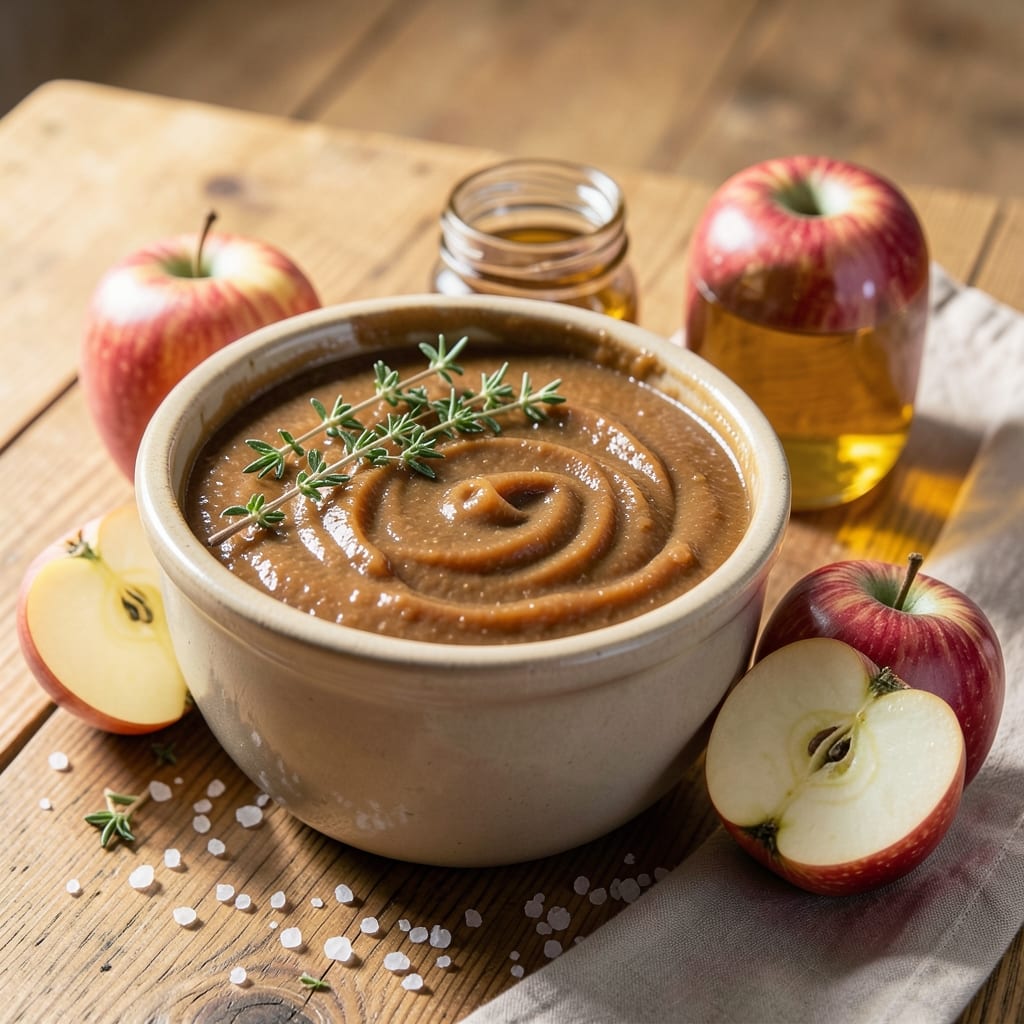
This apple butter recipe with vinegar transforms ordinary apples into a rich, tangy spread that tastes like autumn in a jar. The vinegar isn’t just an ingredient—it’s the secret to balancing sweetness while preserving that perfect jam-like texture. I developed this small-batch method after years of perfecting the art of slow-cooked fruit preserves, and the vinegar makes all the difference.
The process is straightforward: simmer peeled, spiced apples until they break down into a thick, velvety purée, then reduce with vinegar and sweetener until it reaches that signature apple butter consistency. The vinegar adds a subtle tang that cuts through the sweetness, while cinnamon and cloves deepen the warm, spiced flavor. It’s the kind of spread that elevates toast, pancakes, or even grilled cheese to something extraordinary.
What sets this apart is the fermentation-like reduction, which creates a spread with depth and complexity—almost like a cross between classic apple butter and a tangy chutney. The result is a small-batch preserve that’s rich, smooth, and just a little bit bright, with a shelf life of months if stored properly. It’s the perfect balance of comfort and sophistication, all in one jar.
Once you taste this version, you’ll never go back to store-bought again. The vinegar’s acidity preserves the apples’ natural sweetness while adding a layer of complexity that makes it stand out. Ready to make a batch? Let’s get started.
Ingredients for apple butter recipe vinegar
Eight ingredients transform simple apples into a sophisticated, tangy preserve with restaurant-quality depth.
| Ingredient | Amount | Notes |
|---|---|---|
| Apples (Granny Smith or Honeycrisp) 🍎 | 2 ½ lb | Peeled, cored, chopped into chunks |
| Apple Cider Vinegar 🍏 | ½ cup | Raw, unfiltered preferred |
| Brown Sugar 🍚 | 1 ½ cups | Light or dark, packed |
| Ground Cinnamon 🌿 | 1 ½ tbsp | Freshly ground for best flavor |
| Ground Cloves 🌶️ | ½ tsp | Whole cloves crushed preferred |
| Salt 🧂 | ½ tsp | Kosher or sea salt |
| Water 💧 | ½ cup | For initial simmering |
| Lemon Juice 🍋 | 1 tbsp | Freshly squeezed for brightness |
The apples are the foundation, and Granny Smith or Honeycrisp deliver the perfect balance of tartness and sweetness. Local farmers markets often have these varieties at peak season, but the grocery store’s organic section works too—just avoid bruised spots. Vinegar matters here; raw, unfiltered apple cider vinegar adds complexity that store-bought versions lack. For the spices, Penzeys or bulk bins offer the freshest ground cinnamon and whole cloves—crushing your own cloves releases more aromatic oils. If you can't find whole cloves, pre-ground works, but the flavor won't be as vibrant.
No apple cider vinegar? White vinegar or balsamic vinegar in equal amounts will work, though the flavor profile shifts slightly. Brown sugar substitutes like maple syrup or coconut sugar can replace it one-to-one, but the texture may be slightly softer. For the apples, Fuji or Gala varieties work in a pinch, though they lack the tartness that defines this recipe. The lemon juice is non-negotiable—it brightens the final spread and balances the sweetness. If you're short on time, bottled lemon juice
This spread thickens as it cools, so don't be alarmed if it looks runny at first. Store in a sterilized glass jar with a tight seal—it'll keep in the fridge for up to 3 months or 6 months in the freezer. The flavor actually improves over time, developing a deeper complexity. For serving, spread on warm toast, drizzle over yogurt, or mix into oatmeal. The vinegar's tang makes it perfect for pairing with sharp cheeses like aged cheddar or blue cheese, creating a flavor explosion.
Why You'll Love This Recipe
- Five-Ingredient Magic: I swear, this is the kind of recipe where you almost feel guilty for how little effort it takes. Peel and chop apples, toss in vinegar and spices—then let the slow simmer do its thing. No fancy techniques, no last-minute grocery runs.
- Sweet-Tart Wake-Up: That first spoonful? It’s like autumn in a jar—tangy from the vinegar, rich from the brown sugar, with just a whisper of clove heat. Honestly, I’ve used it on toast, in marinades, even drizzled over yogurt. It’s the kind of flavor that makes you pause mid-bite.
- Pantry Staple Power: Between us, this stuff lasts forever in my fridge. A little goes a long way—glaze for pork chops, stir into oatmeal, or even mix into salad dressings. I’ve had it sit for weeks, and it’s still the star of whatever I throw it at.
- Budget-Friendly Luxury: Apples and vinegar are cheap, but the results? Feels like a gourmet treat. I make a big batch and give it away—people think I’m some fancy chef. (Our secret.) Plus, the spices cost pennies but make it taste like you spent hours.
Step-by-step instructions for fermented apple butter
Transform fresh apples into a rich, tangy spread with this precise fermentation method.
Prepare and Simmer the Apple Base
In a large, heavy-bottomed pot, combine the peeled, cored, and chopped 2.5 lb Apples (Granny Smith or Honeycrisp) with the 0.5 cup Water. Bring to a boil over medium-high heat, then reduce to a simmer. Cook uncovered for 20-25 minutes until the apples break down completely and release their juices, forming a thick purée.
Stir occasionally to prevent sticking, and watch for the mixture to reduce by about half. You'll notice the texture transform from chunky to smooth—this is when the natural pectin in the apples begins to thicken. If the mixture looks too thick before the time is up, add 1 tablespoon of water at a time until it reaches a loose, spoonable consistency. This foundational step ensures your apple butter will have the right texture for fermentation.
Add Sweetener and Spices
Once the apple mixture has thickened, remove the pot from heat and stir in the 1.5 cups Brown Sugar, 1.5 tbsp Ground Cinnamon, 0.5 tsp Ground Cloves, and 0.5 tsp Salt. Mix well to combine, then return the pot to low heat. Let the mixture simmer gently for 10-15 minutes, stirring frequently to prevent burning. The spices will infuse their flavors into the warm apple mixture, creating a fragrant, aromatic base.
You'll see the sugar begin to dissolve and the mixture thicken further. This step is where the sweetness balances the tangy fermentation that's coming. Taste the mixture at this stage—it should be sweet but not cloying, with a warm spice note. If you prefer a stronger spice flavor, you can increase the cinnamon to 2 tbsp, but stick to the original amounts for a classic balance.
Incorporate Vinegar and Lemon Juice
Remove the pot from heat again and stir in the 0.5 cup Apple Cider Vinegar and 1 tbsp Lemon Juice. The vinegar introduces beneficial bacteria for fermentation, while the lemon juice adds brightness and prevents mold growth. Mix thoroughly to ensure even distribution—this is critical for both flavor and preservation.
Return the mixture to low heat and let it simmer for another 5 minutes, stirring occasionally. You'll notice the mixture become slightly thicker as the vinegar and lemon juice integrate. The tangy aroma will be more pronounced now, signaling that the fermentation process is about to begin. This step is where the magic happens—the vinegar kickstarts the fermentation while the lemon juice ensures a clean, bright finish.
Ferment and Thicken
Transfer the apple mixture to a clean, airtight glass jar or fermentation vessel, leaving about 1 inch of headspace. Cover loosely with a lid or cloth to allow airflow while keeping out debris. Let the mixture ferment at room temperature for 3-5 days, stirring gently once daily. You'll see bubbles form on the surface and a slight effervescence—this indicates active fermentation.
After 3 days, taste the mixture. It should have a subtle tang and a deeper apple flavor. If the texture isn't thick enough for your liking, transfer the jar to a saucepan and simmer over low heat for 15-20 minutes, stirring frequently, until it reaches a spreadable consistency. The fermentation process will have concentrated the flavors, so you may need to adjust the sweetness or spice levels to taste at this stage.
Store and Enjoy
Once the apple butter reaches your desired thickness and tanginess, transfer it to a sterilized glass jar and refrigerate. It will continue to ferment slowly in the fridge, developing deeper flavors over time. For best results, use within 3 months—the longer it ferments, the more complex the flavor becomes.
Serve the apple butter on toast, swirled into yogurt, or spread directly on fresh fruit. The tangy, spiced profile pairs beautifully with sharp cheeses or as a glaze for roasted meats. If the texture becomes too thick after refrigeration, simply reheat it gently and stir in 1-2 teaspoons of water to loosen it. This method yields a small batch, perfect for gifting or enjoying in small portions.
Pro Tips For Making Apple Butter Recipe Vinegar
- PEEL AND CORE FAST: Peeling apples is tedious, but skipping it ruins the texture. Use a sharp paring knife to slice off the peel in strips—no peeler needed—and cut out the core in one clean motion. (I learned this the hard way after spending 20 minutes on a single apple.)
- SIMMER LOW AND LONG: This isn’t a quick cook. Keep the heat at a gentle simmer—no boiling—so the vinegar infuses without evaporating too fast. If it bubbles hard, you’re wasting flavor. (Yes, even if you’re impatient like me.)
- ADD SPICES LAST: Ground cinnamon and cloves burn faster than you think. Stir them in only during the final 15 minutes of cooking, or they’ll turn bitter. (I was skeptical until I tried it—now I never skip this.)
- STRAIN THROUGH CHEESECLOTH: A fine-mesh sieve leaves behind gritty apple bits. For silky-smooth vinegar, line it with damp cheesecloth and press gently. (Does it look weird? Yes. Does it work? Every single time.)
Serving suggestions for this recipe
Toast Perfection
Warm, crusty bread is the ultimate canvas for this tangy apple butter. I love using sourdough or brioche toasted in a cast-iron skillet until golden and crisp. The vinegar’s brightness cuts through the richness of the butter, while the spices add warmth. For extra indulgence, drizzle with local honey or sprinkle with flaky sea salt before serving. 🥖
Cheese Pairings
The vinegar’s acidity makes this apple butter a match made in heaven with sharp cheeses. Try it with aged cheddar or blue cheese on a charcuterie board—it’s like a flavor party in your mouth. For a sweet-savory combo, pair it with brie or goat cheese on crackers. The tanginess balances the creaminess perfectly, creating a sophisticated bite.
Yogurt and Oatmeal
Stir a spoonful into Greek yogurt for a breakfast that’s creamy, tangy, and packed with protein. I like to add a pinch of cardamom for an extra layer of warmth. For oatmeal, mix it in while the oats are still hot—it melts right in and adds a caramel-like sweetness. The vinegar’s subtle tang keeps the flavors from getting too heavy, making it a great way to start your day.
Meat Glazes
This apple butter isn’t just for breakfast—it’s a fantastic glaze for roasted meats. Brush it onto pork chops or ham during the last 10 minutes of cooking at 375°F for a sticky, caramelized finish. The vinegar helps tenderize the meat while adding a tangy contrast to the richness. It also works beautifully as a BBQ sauce for pulled pork or ribs, especially when paired with a touch of smoked paprika. 🍖
Dessert Elevation
Take your desserts to the next level by swirling this apple butter into vanilla ice cream or spreading it on warm apple pie slices. The vinegar’s tang cuts through the sweetness, making every bite more complex. For a showstopper, drizzle it over baked apples or pancakes—it’s a game-changer for brunch. The fermentation process gives it a depth that store-bought spreads just can’t match.
Gifting and Storage
This small-batch apple butter makes a stunning gift—just package it in sterilized glass jars with a ribbon and a handwritten note. Store it in the fridge for up to 3 months or freeze for 6 months to preserve its vibrant flavor. The vinegar’s acidity helps it stay fresh longer, so you can enjoy it for months without worrying about spoilage. Plus, the longer it ferments, the more complex the flavors become—it’s like a slow-cooked flavor bomb! 🎁
Nutrition facts
Frequently asked questions
Why does vinegar make apple butter different from regular apple butter?
The vinegar adds a subtle tang that balances the sweetness while introducing beneficial bacteria for natural fermentation. This creates a deeper, more complex flavor profile—almost like a cross between classic apple butter and chutney. The acidity also helps preserve the spread longer, giving it a unique texture and shelf life.
Can I use white vinegar instead of apple cider vinegar?
Yes, but the flavor will be different. White vinegar is more acidic and lacks the depth of apple cider vinegar. For best results, use apple cider vinegar, but if you must substitute, reduce the amount to 0.375 cup to avoid overpowering the sweetness. The fermentation process will still work, though the final product will taste sharper.
How do I know when the apple butter is done fermenting?
Taste it after 3 days—it should have a subtle tang and deeper apple flavor. Look for bubbles on the surface and a slight effervescence. If it's not thick enough, simmer it gently for 15-20 minutes to reduce further. The texture will firm up as it cools, so don't worry if it looks runny at first.
Can I make this recipe without sugar?
Yes, but the texture and flavor will differ. Replace the brown sugar with 1.5 cups maple syrup or coconut sugar for a lower-glycemic option. The fermentation process may take slightly longer, and the final spread will be softer. For a sugar-free version, use 1 cup monk fruit sweetener, but expect a thinner consistency.
What if my apple butter gets moldy during fermentation?
If mold appears, discard the batch immediately—vinegar fermentation isn't always foolproof. To prevent this, ensure your equipment is clean and use 1 tbsp lemon juice (as in the recipe) to inhibit mold growth. Store the jar in a cool, dark place and check daily. If fermentation fails, try again with a smaller batch for better control.