
Beverages
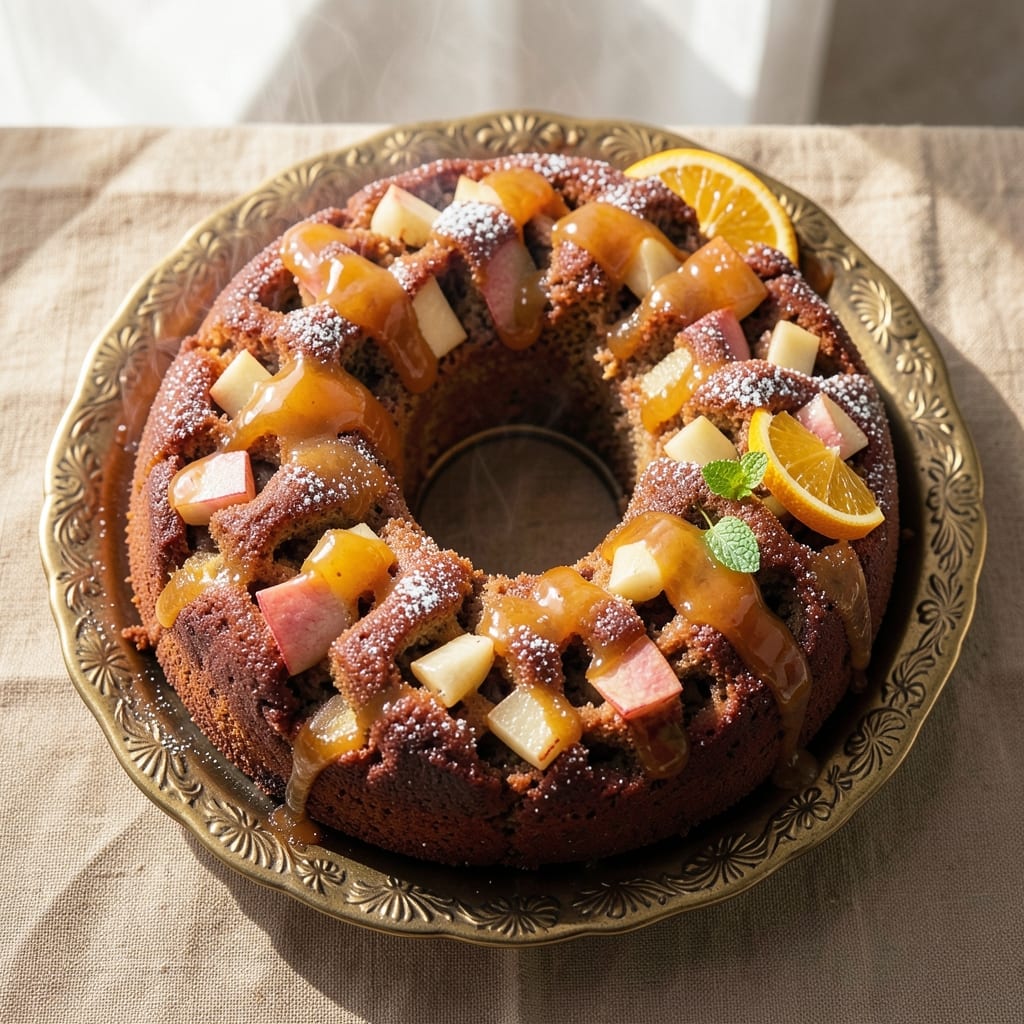
This apple bundt cake recipe with orange juice delivers a perfect balance of spiced apple warmth and bright citrus moisture—every slice is tender, fragrant, and infused with natural sweetness. The secret lies in the orange juice, which keeps the cake impossibly moist while adding a subtle tang that cuts through the vanilla swirls. I've baked this version for years, and it's become my go-to for fall gatherings or when I crave something comforting yet special.
The beauty of this recipe is its simplicity: no fancy techniques, just a few 5 ingredients that come together for a cake with golden-brown edges and a tender crumb. The orange juice not only enhances flavor but also creates that signature moisture that keeps the cake fresh for days. I always grease the bundt pan thoroughly—this ensures easy release and that signature ribbed texture that makes serving a joy.
What you'll end up with is a cake that's rich with apple flavor, brightened by citrus, and swirled with vanilla for depth. The aroma alone will have everyone gathering in the kitchen, and the first bite delivers that perfect harmony of textures—soft, moist, and just slightly spiced. It's the kind of cake that disappears quickly but leaves a lasting impression.
Serve it warm with vanilla ice cream or whipped cream, or enjoy it at room temperature with a dusting of powdered sugar. The orange juice glaze (optional but recommended) adds an extra layer of shine and sweetness that ties everything together beautifully. Let's get baking!
Ingredients for apple bundt cake recipe with orange juice
Five core ingredients plus a few pantry staples—this cake is all about bright citrus and spiced apple goodness.
| Ingredient | Amount | Notes |
|---|---|---|
| All-Purpose Flour 🌾 | 2 cups | Sifted for light texture |
| Granulated Sugar 🍚 | 1 ½ cups | White or light brown |
| Orange Juice 🍊 | 1 cup | Freshly squeezed, no pulp |
| Fresh Apples 🍎 | 2 cups | Peeled, finely diced (Honeycrisp or Granny Smith) |
| Unsalted Butter 🧈 | ½ cup | Room temperature, full-fat |
| Vanilla Extract 🌸 | 1 tbsp | Pure, high-quality |
| Baking Powder 🧂 | 2 tsp | Freshly opened |
| Ground Cinnamon 🌿 | 1 ½ tsp | Freshly ground preferred |
| Ground Nutmeg 🌿 | ½ tsp | Freshly grated |
| Salt 🧂 | ½ tsp | Fine sea salt |
| Powdered Sugar 🍚 | ½ cup | For glaze (optional) |
| Vanilla Ice Cream 🍦 | 1 ½ cups | For serving (optional) |
The apples make or break this cake. Honeycrisp or Granny Smith are my go-tos—Honeycrisp for sweetness, Granny Smith for tang. Grab them at Whole Foods or your local market when they're in season (fall, obviously). If you're using store-bought apples, make sure they're firm and free of bruises. Peeled and finely diced, they should measure about 2 cups. Costco often has pre-peeled apples in the baking aisle, which saves time. The orange juice? Freshly squeezed is non-negotiable—store-bought won't have the same zing. I use about 3-4 oranges for 1 cup of juice, and I strain out every bit of pulp for that silky texture.
No fresh apples? Unsweetened applesauce at half the amount works in a pinch, but you'll lose that lovely texture. Running low on orange juice? Substitute lemon juice at the same amount, though it'll be more tart. The vanilla extract is where you can splurge—Nielsen-Massey or McCormick are reliable. No vanilla? Vanilla bean paste works too, but adjust to taste. The spices are key: if you don't have nutmeg, allspice at half the amount gives a similar warmth. For the glaze, powdered sugar is a must—Domino works fine, but sift it first to avoid lumps. The ice cream is optional, but trust me, it makes this cake feel like a special occasion.
This cake keeps beautifully—3 days at room temperature wrapped in plastic, or 1 week in the fridge. For extra moisture, I like to brush the top with a little orange juice every day. The glaze can be made ahead and reheated gently if it thickens. Slice it while still warm for that perfect pull-apart texture. Leftovers? Microwave 20 seconds to revive the moisture. I always make a double batch because this cake disappears fast—especially when served with that vanilla ice cream melting on top.
Why You'll Love This Recipe
- No-Fuss Mixing: I swear by this recipe—just toss the dry ingredients, fold in the wet, and you’re done. No sifting, no complicated steps, and the orange juice keeps everything moist without extra fuss.
- Citrus-Apple Magic: That bright orange juice cuts through the sweetness of the apples and sugar, making every bite taste like autumn in a Bundt pan. Honestly, the flavor balance is what makes this stand out.
- Breakfast or Dessert: Serve it warm with a drizzle of vanilla glaze for brunch, or let it cool for a showstopping dessert. My kids ask for it both mornings and after dinner—no judgment here.
- Budget-Friendly Staples: You’re using pantry basics (flour, sugar, butter) plus seasonal apples, so it’s cheaper than store-bought cakes. Plus, leftovers last days—perfect for meal prep or unexpected guests.
Step-by-step instructions for apple Bundt cake with orange juice
Here's how to create a tender, citrus-kissed Bundt cake with a perfect vanilla swirl center.
Prepare the Apples and Mix Dry Ingredients
Start by peeling and finely dicing the 2 cups of fresh apples into small, even pieces—about ¼-inch cubes. Toss them with 1 tablespoon of the 1.5 cups granulated sugar and set aside. In a medium bowl, whisk together the 2 cups all-purpose flour, 2 teaspoons baking powder, 1.5 teaspoons ground cinnamon, 0.5 teaspoon ground nutmeg, and 0.5 teaspoon salt. Sift the mixture once to remove any lumps and set aside.
This step ensures your apples release their juices evenly while the dry ingredients are ready to combine smoothly. The sifting prevents dense pockets in your cake, which is especially important for a Bundt with its intricate shape. I like to use Honeycrisp or Granny Smith apples—they hold their shape while adding just the right tartness to balance the sweetness.
Cream Butter and Sugar for Light Texture
In a large mixing bowl, combine the 0.5 cup unsalted butter (at room temperature) and the remaining 0.5 cup granulated sugar. Beat with an electric mixer on medium speed for 2-3 minutes until light and fluffy, scraping down the sides as needed. The mixture should look pale and nearly double in volume. This step incorporates air, which creates that signature tender crumb.
Don't rush this process—under-creaming leads to dense cake. You'll know it's ready when you lift the beaters and see ribbons form that hold their shape for a few seconds. The butter should be fully incorporated without any grainy texture remaining.
Combine Wet Ingredients and Fold in Apples
Add the 1 cup orange juice and 1 tablespoon vanilla extract to the butter-sugar mixture. Mix on low speed until just combined, then gradually add the dry ingredients, mixing on low until the batter is smooth. Fold in the prepared apples with their reserved sugar using a spatula—just until evenly distributed. Be careful not to overmix, as this can develop gluten and make the cake tough.
The orange juice adds moisture and bright citrus notes that complement the apples beautifully. The apples should be evenly dispersed throughout the batter but not mashed—you want visible chunks in each slice. If the batter seems too thick, add 1-2 tablespoons of water to help it flow more easily into the Bundt pan.
Bake to Golden Perfection
Preheat your oven to 350°F and generously grease a 10-12 cup Bundt pan with butter or baking spray, then dust with flour, tapping out any excess. Pour the batter into the prepared pan and bake for 50-60 minutes, or until a toothpick inserted in the center comes out clean. The cake should be golden brown on top and pull away slightly from the edges of the pan.
I always check for doneness at the 50-minute mark—every oven runs slightly differently. The cake is done when it springs back gently when touched and the internal temperature reaches 205°F. Let it cool in the pan for 15 minutes before transferring to a wire rack to cool completely. This gradual cooling prevents cracking as the cake settles.
Serve with Vanilla Ice Cream
Once completely cooled, dust the cake with the 0.5 cup powdered sugar for a beautiful finish. Serve warm or at room temperature with 1.5 cups vanilla ice cream on the side. The contrast between the warm spiced cake and cool vanilla ice cream creates a magical dessert experience.
This cake keeps well at room temperature for 2 days, or you can refrigerate it for up to 5 days. For the best texture, I recommend serving it the day it's made when it's at its peak moisture. The orange juice keeps it wonderfully tender, while the apples add natural sweetness that pairs perfectly with the ice cream.
Pro Tips For Making Apple Bundt Cake Recipe With Orange Juice
- Use Room-Temp Butter: I learned this the hard way—cold butter in this batter makes for a dense, heavy cake. Let that butter sit out for 30 minutes before creaming, or even better, microwave it for 10 seconds to soften. The cake will rise better and stay moist longer.
- Core Apples Like a Pro: Skip the peeler and just cut out the core with a small knife—it’s faster and leaves more surface area for flavor. For extra juice (which balances the sweetness), toss the chopped apples in a splash of lemon juice while prepping, then drain before folding into the batter.
- Don’t Overmix the Batter: After adding the flour, mix just until combined—about 15 seconds. Overmixing develops the gluten and turns your tender bundt cake into a chewy loaf. Use a spatula to gently fold in the apples and orange juice, then stop.
- Bake Until the Center Catches Up: The edges look done at 30 minutes, but the middle’s still raw. I now check doneness by inserting a skewer—if it comes out clean but slightly sticky (not wet), it’s ready. If unsure, tent with foil and bake 5 more minutes. Underbaking is worse than over.
Common mistakes when making your apple bundt cake recipe with orange juice
Overmixing the Batter
I've made this mistake more times than I'd like to admit—overmixing the batter after adding the dry ingredients creates a tough, dense cake. Once you've folded in the apples, stop mixing as soon as they're evenly distributed. The goal is a smooth batter with just a few visible apple chunks, not a thick, elastic dough. Use a spatula to gently fold, and resist the urge to stir vigorously. 💪
Skipping the Grease
This is a non-negotiable step, yet I've seen people rush it. A Bundt pan requires thorough greasing with butter or baking spray, followed by a light dusting of flour. If you skip this, the cake will stick to the intricate patterns, making removal nearly impossible. I recommend using a pastry brush for even coverage, then tapping out excess flour. The extra 5 minutes spent here saves you from a potential disaster.
Using Cold Butter
Cold butter doesn't cream properly, leading to a dense cake with poor texture. Always use butter that's softened to room temperature—it should be pliable but not melted. Press a finger into it; if it leaves a slight indentation, it's ready. I keep my butter on the counter for about 30 minutes before starting, or I microwave it in 10-second bursts until just soft. Never use melted butter in this recipe.
Incorrect Apple Preparation
The apples need to be finely diced—not grated or chopped into large pieces. Large chunks won't soften evenly and create uneven texture in your cake. I measure my diced apples before tossing them with sugar, ensuring they're about ¼-inch cubes. If you're in a hurry, a food processor with the pulse function works, but hand-dicing gives better control. Also, don't skip the sugar toss—it helps the apples release their juices during baking.
Opening the Oven Too Soon
Peeking at your cake too early can cause it to sink or develop a dome in the center. The cake needs time to set properly, especially in the first 30 minutes of baking. I set a timer and resist the temptation to open the oven door. If you're worried about doneness, use the toothpick test at the 50-minute mark instead. The cake should pull away slightly from the pan edges when done, with a golden-brown top.
Ignoring the Cooling Process
Rushing to remove the cake from the pan while it's still hot leads to cracks and a collapsed center. Let it cool in the pan for at least 15 minutes before transferring to a wire rack. This gradual cooling helps the cake set properly. I also recommend inverting the cake onto a plate immediately after removing it from the pan to maintain its shape. Patience here ensures that perfect Bundt texture we all love. ✨
Nutrition facts
Frequently asked questions
Can I substitute orange juice with another citrus?
Yes! You can use lemon juice (same amount) for a brighter, more tart flavor, or grapefruit juice (reduce by 1 tablespoon) for a slightly bitter twist. However, orange juice provides the perfect balance of sweetness and moisture that keeps this cake tender. If using lemon, you may want to add an extra 1 tablespoon of sugar to compensate for its acidity.
Why does my bundt cake stick to the pan?
This usually happens when the pan isn't properly greased or the batter is too dry. Always use butter or baking spray followed by a light flour dusting, tapping out excess. For extra insurance, I recommend using a nonstick bundt pan or adding an extra layer of butter after the first greasing. Let the cake cool in the pan for 15 minutes before inverting.
How do I make this cake gluten-free?
Replace the 2 cups all-purpose flour with a 1:1 gluten-free flour blend (like Bob's Red Mill) plus 1 teaspoon xanthan gum. You may also need to add 2-3 tablespoons extra liquid (like orange juice) since gluten-free batters tend to be drier. Bake at 325°F instead of 350°F to prevent over-browning.
Can I make this cake ahead of time?
This cake actually tastes better the next day. Wrap it tightly in plastic wrap and store at room temperature for up to 3 days, or refrigerate for 5 days. To revive, warm slices in the microwave for 10-15 seconds or at 300°F for 5 minutes. The orange juice keeps it moist even after sitting.
What's the best way to store leftovers?
Slice the cake and store in an airtight container at room temperature for 2 days, or refrigerate for up to 5 days. For longer storage, freeze slices wrapped individually for up to 3 months. Thaw overnight in the fridge or warm directly in the microwave for 15-20 seconds for that fresh-baked taste.